
COF-C02 · Question #117
Assume there is a table consisting of five micro-partitions with values ranging from A to Z. Which diagram indicates a well-clustered table? A. B. C. D.
The correct answer is C. Diagram showing 5 micro-partitions with distinct, sequential, and non-overlapping ranges covering A-Z (e.g., A-F, G-L, M-R, S-X, Y-Z). A well-clustered table in Snowflake has micro-partitions with distinct, sequential, and non-overlapping value ranges. This means Snowflake's query optimizer can prune (skip) irrelevant micro-partitions efficiently during scans, significantly improving performance. When…
Question
Assume there is a table consisting of five micro-partitions with values ranging from A to Z. Which diagram indicates a well-clustered table? A. B. C. D.
Exhibits
Options
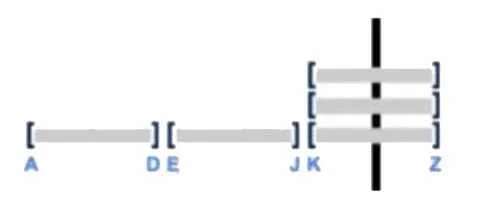
- ADiagram showing 5 micro-partitions with overlapping and gapped ranges (e.g., DE, JK, NO, ST, Z) within A-Z.
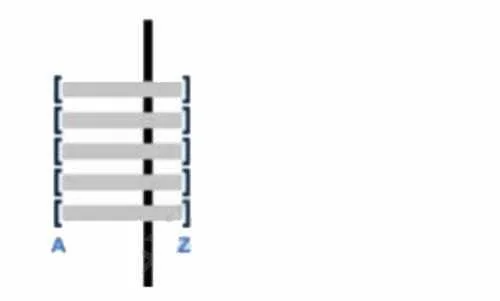
- BDiagram showing 5 micro-partitions, where each micro-partition spans the entire range from A to Z.
- CDiagram showing 5 micro-partitions with distinct, sequential, and non-overlapping ranges covering A-Z (e.g., A-F, G-L, M-R, S-X, Y-Z).
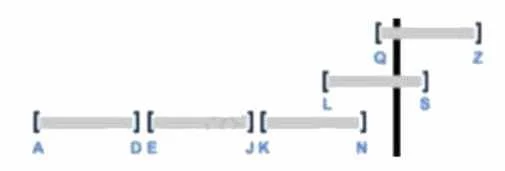
- DDiagram showing 5 micro-partitions with significant overlaps in ranges (e.g., A-F, DE-JK, JK-NO, NO-ST, ST-Z) within A-Z.
How the community answered
(62 responses)- A2% (1)
- B3% (2)
- C94% (58)
- D2% (1)
Explanation
A well-clustered table in Snowflake has micro-partitions with distinct, sequential, and non-overlapping value ranges. This means Snowflake's query optimizer can prune (skip) irrelevant micro-partitions efficiently during scans, significantly improving performance. When micro-partitions overlap heavily (as in D), Snowflake cannot prune effectively and must scan more data. When each micro-partition spans the entire range (B), there is no pruning possible. Option A shows partial overlap which is better than B or D but not ideal. Only option C - with clean, non-overlapping sequential ranges - represents a well-clustered table.
Topics
Community Discussion
No community discussion yet for this question.