
CISSP · Question #1530
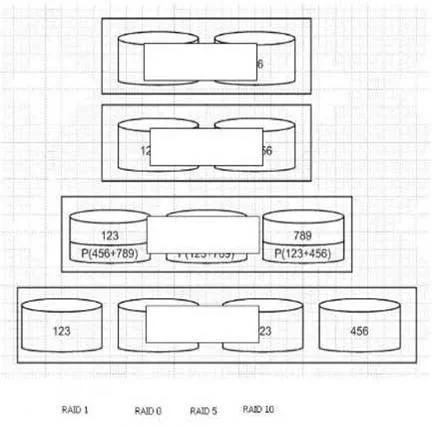
Drag and Drop Question Given a file containing ordered number, i.e. "123456789," match each of the following redundant Array of independent Disks (RAID) levels to the corresponding visual…
The correct answer is RAID 1; RAID 0; RAID 5; RAID 10. Each RAID level has a distinct visual signature: RAID 1 (mirroring) duplicates all data across two drives so both disks contain '123456789'; RAID 0 (striping) splits data across drives with no redundancy so each disk holds alternating segments like '1357' and '2468'; RAID 5…
Question
Exhibit
Answer Area
Drag items
Correct arrangement
- RAID 1
- RAID 0
- RAID 5
- RAID 10
Explanation
Each RAID level has a distinct visual signature: RAID 1 (mirroring) duplicates all data across two drives so both disks contain '123456789'; RAID 0 (striping) splits data across drives with no redundancy so each disk holds alternating segments like '1357' and '2468'; RAID 5 (striping with distributed parity) spreads data AND rotating parity blocks across three or more drives so each drive has a mix of data segments and P() blocks; RAID 10 (mirror of stripes) combines RAID 0 striping with RAID 1 mirroring, producing pairs of mirrored drives that each hold striped data. Matching these visual patterns correctly requires understanding how each RAID level distributes and protects data across its member disks.
Topics
Community Discussion
No community discussion yet for this question.