
AZ-900 · Question #37
Hotspot Question You plan to implement an Azure database solution. You need to implement a database solution that meets the following requirements: - Can add data concurrently from multiple regions…
The correct answer is Select the appropriate service in the answer area.: Azure Cosmos DB. Azure Cosmos DB is the ideal choice as it's a globally distributed, multi-model database supporting concurrent writes from multiple regions and native storage of JSON documents.
Question
Exhibit
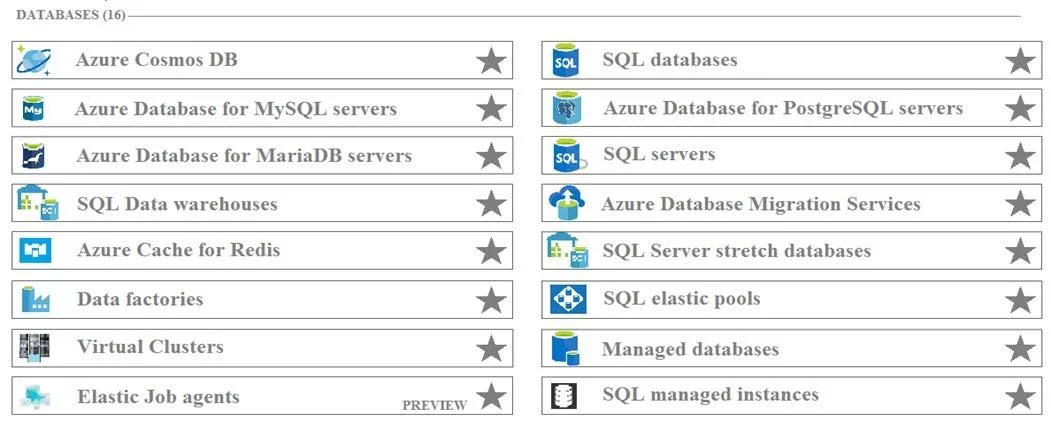
Answer Area
- Select the appropriate service in the answer area.Azure Cosmos DBAzure Cosmos DBAzure Database for MySQL serversAzure Database for MariaDB serversSQL Data warehousesAzure Cache for RedisData factoriesVirtual ClustersElastic Job agentsSQL databasesAzure Database for PostgreSQL serversSQL serversAzure Database Migration ServicesSQL Server stretch databasesSQL elastic poolsManaged databasesSQL managed instances
Explanation
Azure Cosmos DB is the ideal choice as it's a globally distributed, multi-model database supporting concurrent writes from multiple regions and native storage of JSON documents.
Approach. To answer this hotspot question, the test-taker must click on 'Azure Cosmos DB'. The requirements are: 1) Can add data concurrently from multiple regions, and 2) Can store JSON documents. Azure Cosmos DB is a globally distributed, multi-model database service that natively supports JSON documents (via its Core (SQL) API and other APIs like MongoDB). It offers multi-region write capabilities, allowing data to be written and accessed concurrently from multiple Azure regions with low latency, meeting both specified requirements perfectly. Its global distribution features are a key differentiator for concurrent multi-region writes.
Common mistakes.
- common_mistake. A common mistake would be to choose a relational database service like 'SQL databases' or 'Azure Database for MySQL/PostgreSQL/MariaDB servers'. While some relational databases can store JSON data types, their primary structure is tabular, and they do not inherently offer the same level of global distribution with native multi-region concurrent write capabilities as Azure Cosmos DB. Implementing multi-region concurrent writes with strong consistency in traditional relational databases is significantly more complex or not natively supported across all listed services. 'SQL Data warehouses' are for analytical workloads, not transactional JSON document storage. 'Azure Cache for Redis' is an in-memory cache, not a primary persistent database for this scenario.
Concept tested. This question tests the understanding of various Azure database services, specifically their capabilities regarding data model (JSON documents vs. relational), global distribution, and concurrent write access from multiple regions. It assesses the ability to select the most appropriate database service based on specific functional requirements, highlighting the unique strengths of Azure Cosmos DB in global scale and document storage.
Reference. https://learn.microsoft.com/en-us/azure/cosmos-db/introduction
Topics
Community Discussion
No community discussion yet for this question.