
AZ-700 · Question #40
You have the Azure load balancer shown in the Load Balancer exhibit. LB2 has the backend pools shown in the Backend Pools exhibit. You need to ensure that LB2 distributes traffic to all the members…
The correct answer is B. Configure a health probe. D. Add a load balancing rule. To enable LB2 to distribute traffic to all members of VMSS1, you need two components: (B) a health probe and (D) a load balancing rule. A health probe is required so the load balancer can determine which VMSS instances are healthy and available to receive traffic - without it…
Question
You have the Azure load balancer shown in the Load Balancer exhibit. LB2 has the backend pools shown in the Backend Pools exhibit. You need to ensure that LB2 distributes traffic to all the members of VMSS1. Which two actions should you perform? Each correct answer presents part of the solution. NOTE: Each correct selection is worth one point.
Exhibit
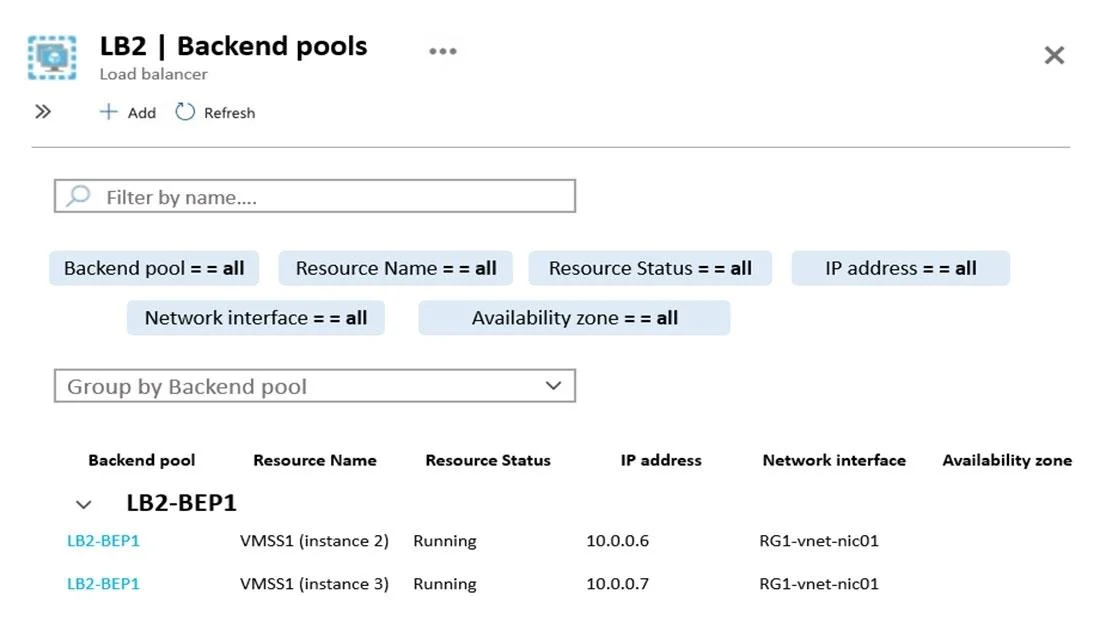
Options
- AAdd a network interface to VMSS1.
- BConfigure a health probe.
- CAdd a public IP address to each member of VMSS1.
- DAdd a load balancing rule.
How the community answered
(60 responses)- A18% (11)
- B70% (42)
- C12% (7)
Explanation
To enable LB2 to distribute traffic to all members of VMSS1, you need two components: (B) a health probe and (D) a load balancing rule. A health probe is required so the load balancer can determine which VMSS instances are healthy and available to receive traffic - without it, the load balancer cannot make intelligent forwarding decisions. A load balancing rule is required to define the frontend IP, port, backend pool, and health probe association that actually directs incoming traffic to the VMSS members. Choice A is incorrect because VMSS instances already have network interfaces by default. Choice C is incorrect because backend pool members do not need individual public IPs - the load balancer's frontend IP handles inbound public traffic.
Community Discussion
No community discussion yet for this question.