
AZ-400 · Question #58
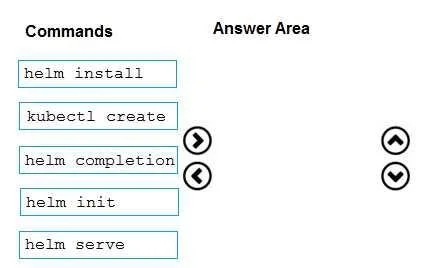
Drag and Drop Question You need to recommend a solution for deploying charts by using Helm and Title to Azure Kubemets Service (AKS) in an RBAC-enabled cluster. Which three commands should you…
The correct answer is kubectl create; helm init; helm install. In an RBAC-enabled AKS cluster, the correct sequence is: (1) 'kubectl create' to create a ServiceAccount and ClusterRoleBinding for Tiller (Helm's server-side component) so it has the necessary RBAC permissions, (2) 'helm init --service-account tiller' to initialize Helm and…
Question
Exhibit
Answer Area
Drag items
Correct arrangement
- kubectl create
- helm init
- helm install
Explanation
In an RBAC-enabled AKS cluster, the correct sequence is: (1) 'kubectl create' to create a ServiceAccount and ClusterRoleBinding for Tiller (Helm's server-side component) so it has the necessary RBAC permissions, (2) 'helm init --service-account tiller' to initialize Helm and deploy Tiller into the cluster using the created service account, and (3) 'helm install' to deploy the desired chart to the cluster. This sequence ensures Tiller has proper RBAC permissions before it is initialized, preventing permission errors when deploying charts.
Topics
Community Discussion
No community discussion yet for this question.