
AZ-400 · Question #486
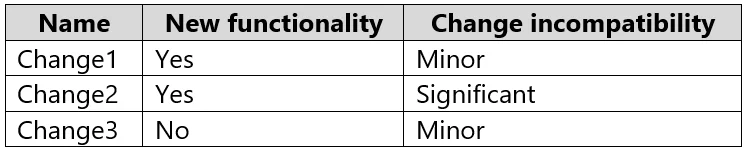
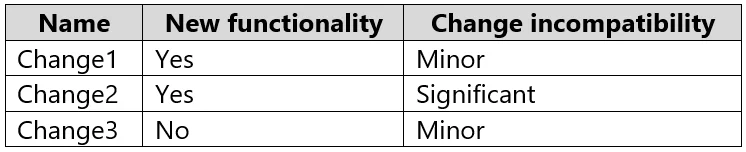
Drag and Drop Question You use Semantic Versioning (SemVer) as a dependency versioning strategy. You perform changes to code as shown in the following table. Which part of the version should you…
The correct answer is Major; Major; Major. In Semantic Versioning (SemVer), the Major version is incremented when you introduce breaking changes that are not backward-compatible. All three changes shown in the table involve breaking changes to the API or existing functionality, which means consumers of the library must…
Question
Exhibits
Answer Area
Drag items
Correct arrangement
- Major
- Major
- Major
Explanation
In Semantic Versioning (SemVer), the Major version is incremented when you introduce breaking changes that are not backward-compatible. All three changes shown in the table involve breaking changes to the API or existing functionality, which means consumers of the library must update their code to accommodate the new version - this always requires a Major version bump. The SemVer specification (semver.org) is explicit: MAJOR version increments signal incompatible API changes, making it the correct answer for all three scenarios presented.
Topics
Community Discussion
No community discussion yet for this question.