
AZ-305 · Question #45
Drag and Drop Question Your company designs an application based on the Azure microservices architecture that will: - Receive up to thousands of events per second from environmental sensors…
The correct answer is Azure Event Hub; Azure Event Hub; Azure Function. Azure Event Hub is the correct choice for both ingesting the high-volume sensor events (receiving thousands of events per second) and for submitting events in real-time for formatting/pre-processing, as it is purpose-built for big data streaming and telemetry ingestion with…
Question
Exhibit
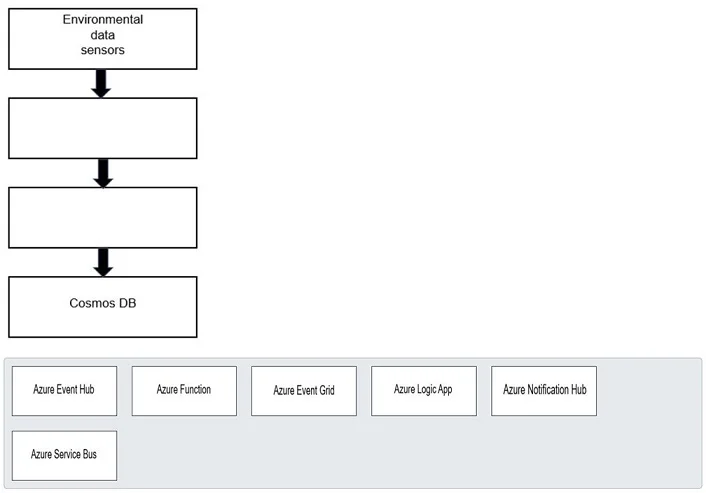
Answer Area
Drag items
Correct arrangement
- Azure Event Hub
- Azure Event Hub
- Azure Function
Explanation
Azure Event Hub is the correct choice for both ingesting the high-volume sensor events (receiving thousands of events per second) and for submitting events in real-time for formatting/pre-processing, as it is purpose-built for big data streaming and telemetry ingestion with high throughput and low latency. Azure Functions is the correct serverless compute option for formatting and pre-processing the event data because it scales automatically with variable event loads (minimizing costs by only charging for executions), can be triggered directly by Event Hub, and can gracefully handle/ignore malformed data without interrupting the stream before writing to Cosmos DB. This combination - Event Hub → Event Hub (stream processing trigger) → Azure Function → Cosmos DB - provides a cost-effective, scalable microservices pipeline.
Topics
Community Discussion
No community discussion yet for this question.