
AZ-305 · Question #36
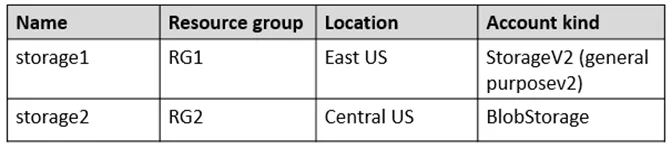
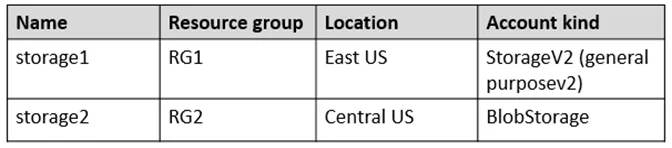
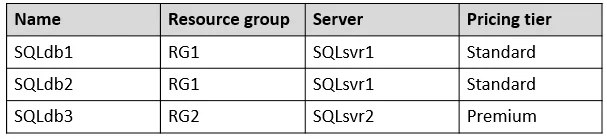
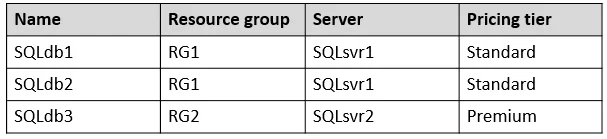
Hotspot Question You have an Azure subscription that contains the SQL servers on Azure shown in the following table. The subscription contains the storage accounts shown in the following table. You…
The correct answer is When you enable auditing for SQLdb1, you can store the audit information to storage1. = Yes; When you enable auditing for SQLdb2, you can store the audit information to storage2. = No; When you enable auditing for SQLdb3, you can store the audit information to storage2. = Yes. Azure SQL Database auditing requires that the storage account used for audit logs be in the same region as the SQL server, OR the storage account can be in any region if using a General Purpose v2 (GPv2) or higher account type. Statement 1 is Yes because SQLdb1's server…
Question
Exhibits


Answer Area
- When you enable auditing for SQLdb1, you can store the audit information to storage1.Yes
- When you enable auditing for SQLdb2, you can store the audit information to storage2.No
- When you enable auditing for SQLdb3, you can store the audit information to storage2.Yes
Explanation
Azure SQL Database auditing requires that the storage account used for audit logs be in the same region as the SQL server, OR the storage account can be in any region if using a General Purpose v2 (GPv2) or higher account type. Statement 1 is Yes because SQLdb1's server (server1) and storage1 share the same region. Statement 2 is No because SQLdb2's server (server2) is in a different region than storage2, and storage2 is not a GPv2 account (or does not meet cross-region requirements). Statement 3 is Yes because even though SQLdb3's server (server3) may be in a different region, storage2 meets the GPv2 requirement allowing cross-region audit log storage.
Topics
Community Discussion
No community discussion yet for this question.