
AZ-305 · Question #267
Drag and Drop Question You are designing a virtual machine that will run Microsoft SQL Server and contain two data disks. The first data disk will store log files, and the second data disk will…
The correct answer is Log: None; Data: ReadOnly. For SQL Server log disks, 'None' (no caching) is the correct choice because write-ahead logging requires that log writes be immediately committed to durable storage - enabling caching could risk data loss or corruption if the VM crashes before the cache is flushed. For SQL…
Question
Exhibit
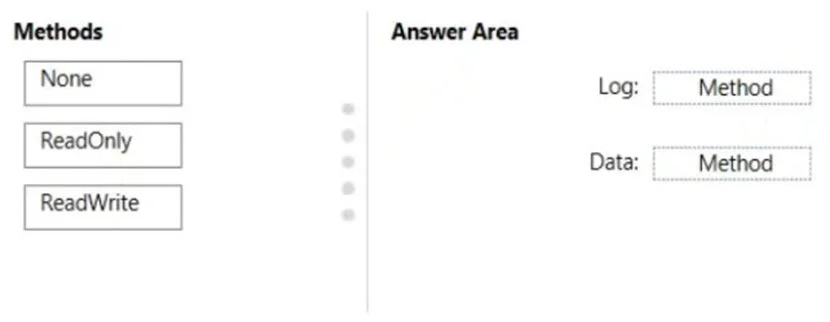
Answer Area
Drag items
Correct arrangement
- Log: None
- Data: ReadOnly
Explanation
For SQL Server log disks, 'None' (no caching) is the correct choice because write-ahead logging requires that log writes be immediately committed to durable storage - enabling caching could risk data loss or corruption if the VM crashes before the cache is flushed. For SQL Server data disks, 'ReadOnly' caching is optimal because data files are frequently read (e.g., index lookups, query scans) and reads benefit significantly from the Azure host cache, while writes bypass the cache entirely (write-through behavior), preserving data integrity. This combination maximizes IOPS/throughput performance while ensuring SQL transactional consistency.
Topics
Community Discussion
No community discussion yet for this question.