
Microsoft
AZ-204 · Question #487
Drag and Drop Question You are developing an Azure solution. You need to develop code to access a secret stored in Azure Key Vault. How should you complete the code segment? To answer, drag the…
Sign in or unlock AZ-204 to reveal the answer and full explanation for question #487. The question stem and answer options stay visible for context.
Submitted by salim_om· Mar 30, 2026Develop for Azure Storage and Implement Azure Security - specifically implementing secure access to Azure Key Vault secrets using the Azure Identity and Key Vault SDK libraries (AZ-204 / Azure Developer certification)
Question
Drag and Drop Question You are developing an Azure solution. You need to develop code to access a secret stored in Azure Key Vault. How should you complete the code segment? To answer, drag the appropriate code segments to the correct location. Each code segment may be used once, more than once, or not at all. You may need to drag the split bar between panes or scroll to view content. NOTE: Each correct selection is worth one point. Answer:
Exhibit
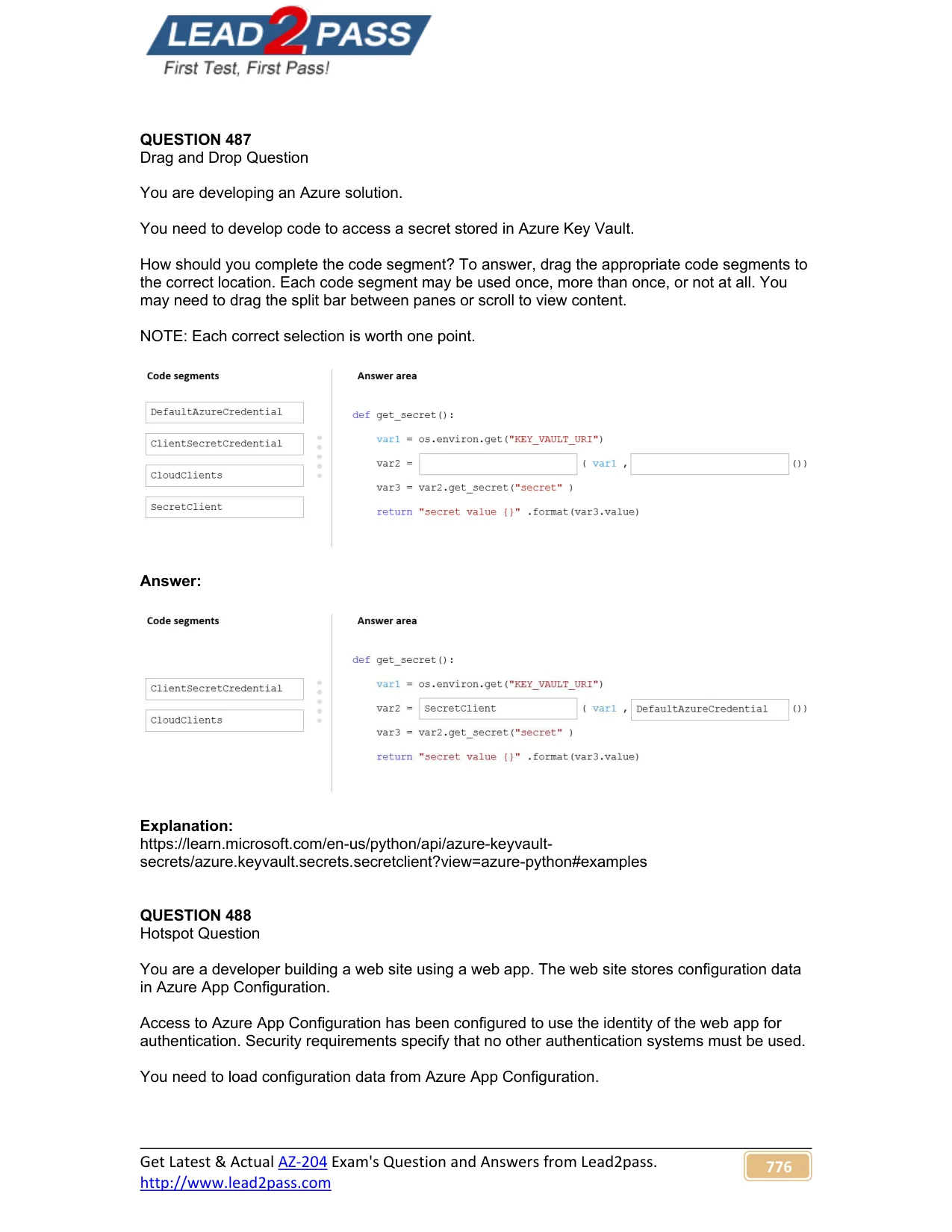
Answer Area
Drag items
DefaultAzureCredentialClientSecretCredentialCloudClientsSecretClient
Unlock AZ-204 to see the answer
You've previewed enough free AZ-204 questions. Unlock AZ-204 for full answers, explanations, the timed quiz mode, progress tracking, and the master PDF. Question stem and options stay visible so you can still see what's on the exam.
Topics
#Azure Key Vault#Azure SDK Authentication#DefaultAzureCredential#Managed Identity