
Microsoft
AZ-204 · Question #335
You are developing a web app that is protected by Azure Web Application Firewall (WAF). All traffic to the web app is routed through an Azure Application Gateway instance that is used by multiple…
Sign in or unlock AZ-204 to reveal the answer and full explanation for question #335. The question stem and answer options stay visible for context.
Submitted by haruto_sh· Mar 30, 2026Implement Azure security
Question
You are developing a web app that is protected by Azure Web Application Firewall (WAF). All traffic to the web app is routed through an Azure Application Gateway instance that is used by multiple web apps. The web app address is contoso.azurewebsites.net. All traffic must be secured with SSL. The Azure Application Gateway instance is used by multiple web apps. You need to configure the Azure Application Gateway for the app. Which two actions should you perform? Each correct answer presents part of the solution. NOTE: Each correct selection is worth one point.
Exhibit
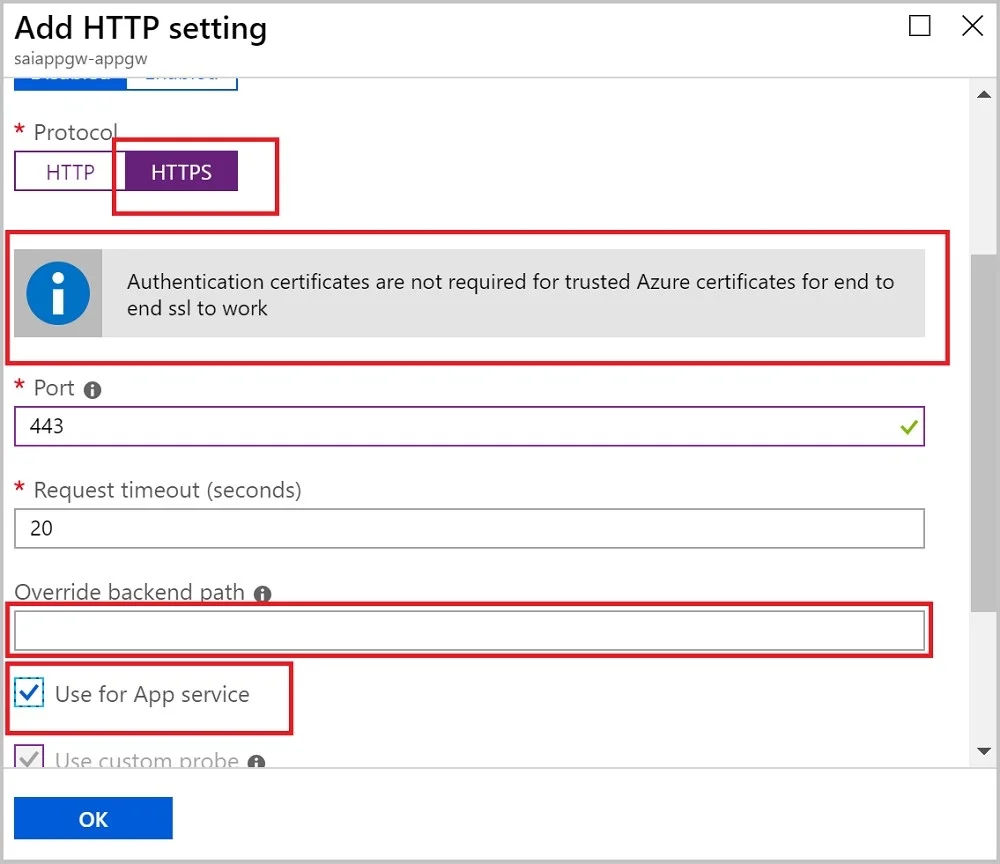
Options
- AIn the Azure Application Gateway's HTTP setting, enable the Use for App service setting.
- BConvert the web app to run in an Azure App service environment (ASE).
- CAdd an authentication certificate for contoso.azurewebsites.net to the Azure Application gateway.
- DIn the Azure Application Gateway's HTTP setting, set the value of the Override backend path
Unlock AZ-204 to see the answer
You've previewed enough free AZ-204 questions. Unlock AZ-204 for full answers, explanations, the timed quiz mode, progress tracking, and the master PDF. Question stem and options stay visible so you can still see what's on the exam.
Topics
#Application Gateway#WAF#SSL termination#App Service backend