
AZ-104 · Question #684
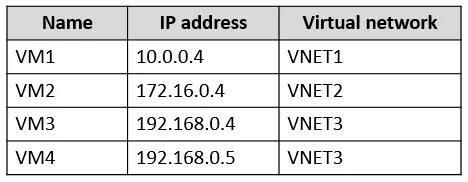
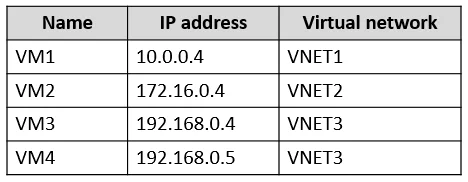
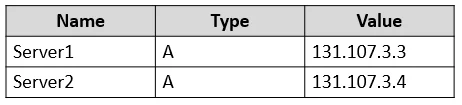
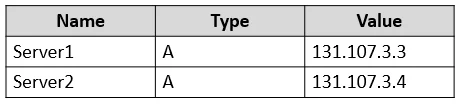
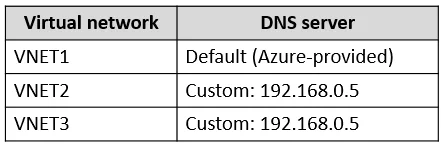
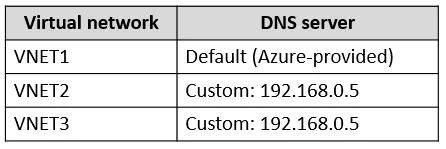
Hotspot Question You have the Azure virtual machines shown in the following table. VNET1, VNET2, and VNET3 are peered. VM4 has a DNS server that is authoritative for a zone named contoso.com and…
The correct answer is From VM1, server1.contoso.com resolves to 131.107.3.3. = Yes; From VM2, server1.contoso.com resolves to 131.107.3.3. = Yes; From VM3, server2.contoso.com resolves to 131.107.2.4. = No. VM1 is in VNET1 and VM2 is in VNET2. Both VNET1 and VNET2 are configured to use VM4's DNS server (which is authoritative for contoso.com), so both VM1 and VM2 can successfully resolve server1.contoso.com to 131.107.3.3 - hence both statements are 'Yes'. VM3 is in VNET3, which…
Question
Exhibits
Answer Area
- From VM1, server1.contoso.com resolves to 131.107.3.3.Yes
- From VM2, server1.contoso.com resolves to 131.107.3.3.Yes
- From VM3, server2.contoso.com resolves to 131.107.2.4.No
Explanation
VM1 is in VNET1 and VM2 is in VNET2. Both VNET1 and VNET2 are configured to use VM4's DNS server (which is authoritative for contoso.com), so both VM1 and VM2 can successfully resolve server1.contoso.com to 131.107.3.3 - hence both statements are 'Yes'. VM3 is in VNET3, which is configured to use Azure's default DNS (or a different DNS server that is NOT VM4), so it cannot resolve server2.contoso.com via VM4's zone, making the third statement 'No' - VM3 cannot resolve that name to 131.107.2.4.
Topics
Community Discussion
No community discussion yet for this question.