
AZ-104 · Question #512
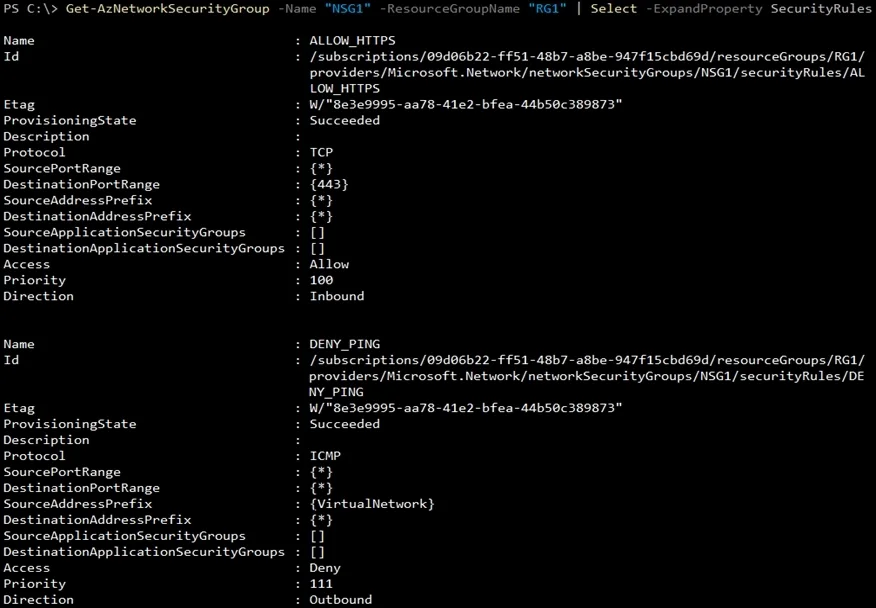
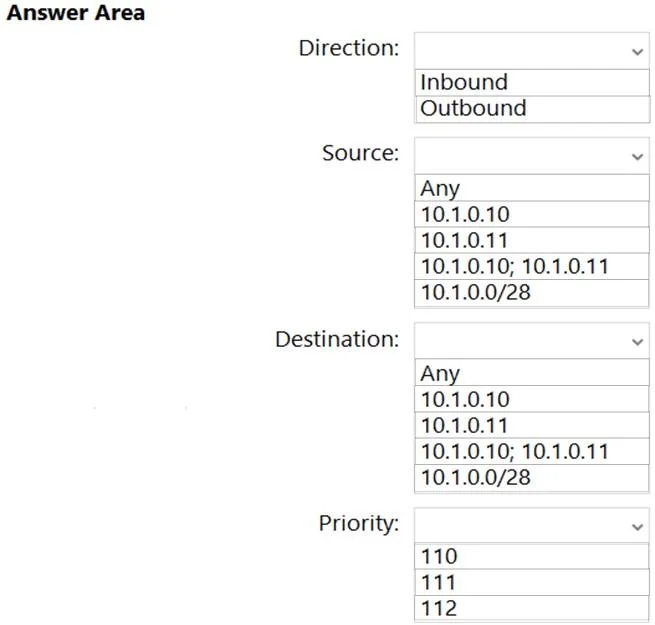
Hotspot Question You have a network security group (NSG) named NSG1 that has the rules defined in the exhibit. (Click the Exhibit tab.) NSG1 is associated to a subnet named Subnet1. Subnet1 contains…
The correct answer is Server2 resolves host2.contoso.com to 131.107.50.50. = No; Server2 resolves host1.contoso.com to 131.107.10.15. = Yes; Server3 resolves host2.contoso.com to 131.107.50.50. = No. To allow VM1 to ping VM2, you need to create an inbound rule that permits ICMP traffic. Since the principle of least privilege requires the most restrictive rule possible, the rule should specify the exact source (VM1's IP address), destination (VM2's IP address), protocol…
Question
Exhibits
Answer Area
- Server2 resolves host2.contoso.com to 131.107.50.50.No
- Server2 resolves host1.contoso.com to 131.107.10.15.Yes
- Server3 resolves host2.contoso.com to 131.107.50.50.No
Explanation
To allow VM1 to ping VM2, you need to create an inbound rule that permits ICMP traffic. Since the principle of least privilege requires the most restrictive rule possible, the rule should specify the exact source (VM1's IP address), destination (VM2's IP address), protocol (ICMP), and action (Allow), rather than using broad ranges like 'Any' or entire subnet CIDRs. ICMP is the protocol used by ping, and scoping the rule to specific IPs ensures no unnecessary access is granted to other resources.
Topics
Community Discussion
No community discussion yet for this question.