
ADA-C01 · Question #48
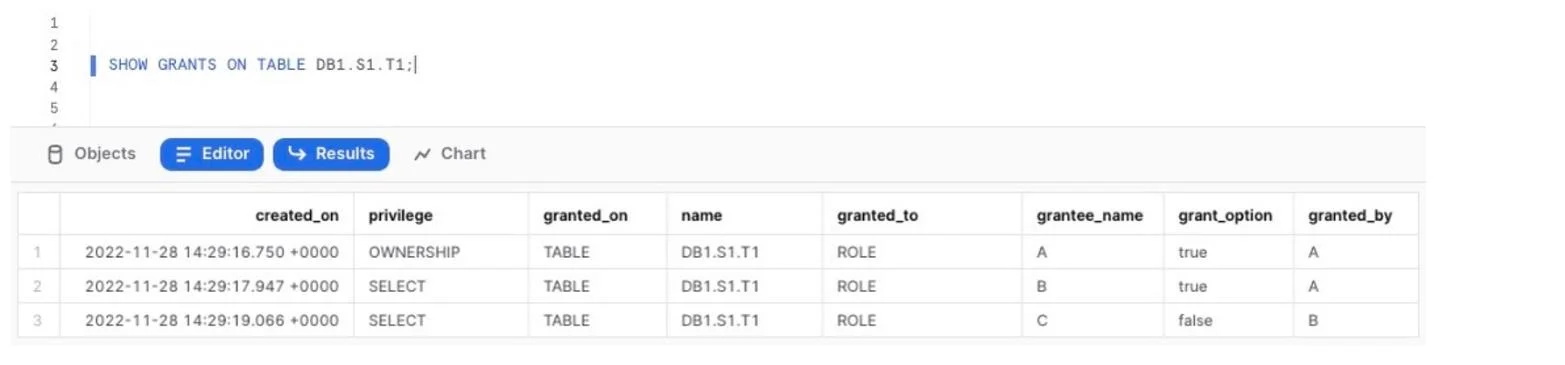
Review the output of the SHOW statement below which displays the current grants on the table DB1. S1. T1: This statement is executed: USE ROLE ACCOUNTADMIN; DROP ROLE A; What will occur?
The correct answer is D. The SELECT privileges for roles B and C will remain. Dropping role A does not affect the SELECT privileges granted to roles B and C on the table DB1.S1.T1. According to the Snowflake documentation, dropping a role revokes all privileges granted to the role, but does not revoke any privileges granted by the role. Therefore, the…
Question
Review the output of the SHOW statement below which displays the current grants on the table DB1. S1. T1:
This statement is executed:
USE ROLE ACCOUNTADMIN; DROP ROLE A; What will occur?
Exhibit
Options
- AThe table object DB1. S1. T1 will be dropped.
- BThe OWNERSHIP privilege on table DB1. S1. T1 will be transferred to the ACCOUNTADMIN
- CThe SELECT privilege on table DB1. S1. T1 to role B will be shown as GRANTED_BY the role
- DThe SELECT privileges for roles B and C will remain.
How the community answered
(43 responses)- A14% (6)
- B2% (1)
- C7% (3)
- D77% (33)
Explanation
Dropping role A does not affect the SELECT privileges granted to roles B and C on the table DB1.S1.T1. According to the Snowflake documentation, dropping a role revokes all privileges granted to the role, but does not revoke any privileges granted by the role. Therefore, the OWNERSHIP privilege on the table DB1.S1.T1 will be revoked from role A, but the SELECT privileges granted by role A to role B and by role B to role C will remain. The GRANTED_BY column will still show the original grantor of the privilege, not the ACCOUNTADMIN role.
Topics
Community Discussion
No community discussion yet for this question.