
AD0-E117 · Question #34
A financial sector client is using AEM 6.5 on premise. The creative team needs to create the content for the various marketing campaigns that are scheduled. The client wants to use Experience…
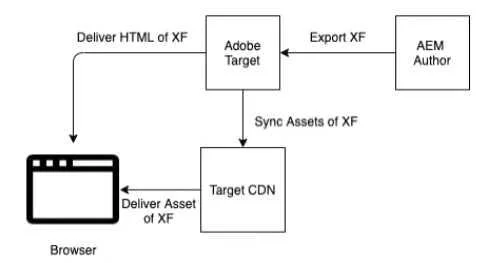
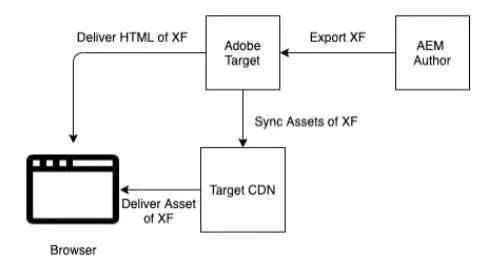
The correct answer is C. Diagram C showing 'Deliver HTML of XF' to 'Adobe Target', 'Export XF' from 'Adobe Target' to 'AEM Author', 'Sync Assets of XF' from 'AEM Author' to 'Target CDN', and 'Deliver Asset of XF' from 'Target CDN' to 'Browser'. Option C correctly represents the recommended Adobe architecture for AEM-to-Target XF integration: the AEM Author exports the XF HTML to Adobe Target (as an HTML offer), syncs the referenced assets to Target's CDN, and the browser receives those assets from the CDN - keeping…
Question
A financial sector client is using AEM 6.5 on premise. The creative team needs to create the content for the various marketing campaigns that are scheduled. The client wants to use Experience Fragments (XF) to accelerate content creation for marketing purposes. Which Data flow diagram should an Architect use to communicate requirements to the client network team? A. B. C. D.
Exhibits
Options
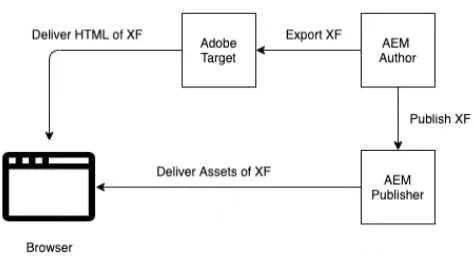
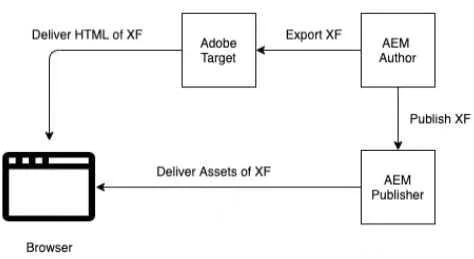
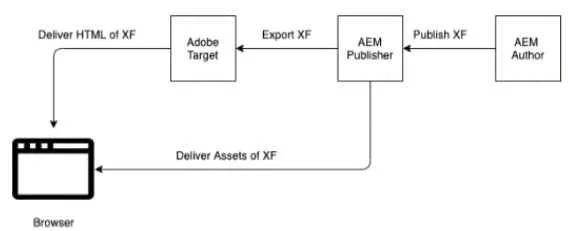
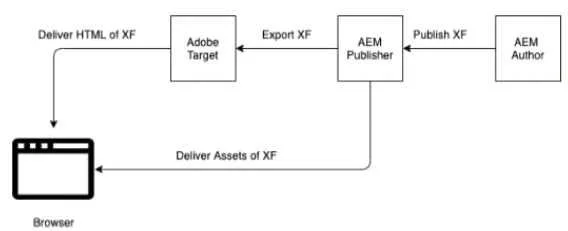
- ADiagram A showing 'Deliver HTML of XF' to 'Adobe Target', 'Export XF' from 'Adobe Target' to 'AEM Author', 'Publish XF' from 'AEM Author' to 'AEM Publisher', and 'Deliver Assets of XF' from 'AEM Publisher' to 'Browser'.
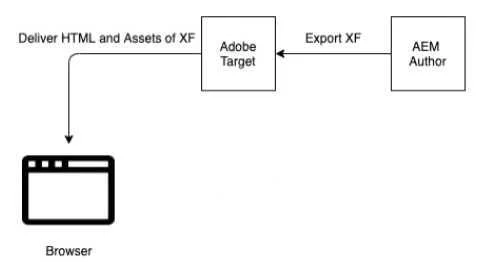
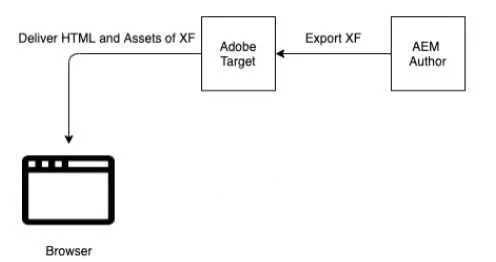
- BDiagram B showing 'Deliver HTML and Assets of XF' to 'Adobe Target', 'Export XF' from 'Adobe Target' to 'AEM Author', and flow to 'Browser'.
- CDiagram C showing 'Deliver HTML of XF' to 'Adobe Target', 'Export XF' from 'Adobe Target' to 'AEM Author', 'Sync Assets of XF' from 'AEM Author' to 'Target CDN', and 'Deliver Asset of XF' from 'Target CDN' to 'Browser'.
- DDiagram D showing 'Deliver HTML of XF' to 'Adobe Target', 'Export XF' from 'Adobe Target' to 'AEM Publisher', 'Publish XF' from 'AEM Publisher' to 'AEM Author', and 'Deliver Assets of XF' from 'AEM Publisher' to 'Browser'.
How the community answered
(44 responses)- A7% (3)
- B5% (2)
- C70% (31)
- D18% (8)
Explanation
Option C correctly represents the recommended Adobe architecture for AEM-to-Target XF integration: the AEM Author exports the XF HTML to Adobe Target (as an HTML offer), syncs the referenced assets to Target's CDN, and the browser receives those assets from the CDN - keeping AEM Publisher isolated from public asset delivery and ensuring performant, scalable content serving.
Why the distractors fail:
- A routes asset delivery through AEM Publisher to the browser, which unnecessarily exposes the publisher tier to public traffic and creates a direct dependency between Target's rendering and your on-premise infrastructure.
- B bundles HTML and assets together into Adobe Target, which is architecturally incorrect - Target receives the HTML fragment as an offer, not a self-contained package with embedded binary assets.
- D reverses the AEM content flow by exporting the XF to AEM Publisher first and then flowing back to AEM Author, which contradicts the Author → Publisher content lifecycle (content always flows from Author to Publisher, never the reverse).
Memory tip: For AEM + Target XF questions, think "HTML is light, assets are heavy" - the lightweight HTML offer goes directly to Target, while the heavy assets get offloaded to a CDN so neither Target nor your AEM Publisher becomes a bottleneck for browser delivery.
Topics
Community Discussion
No community discussion yet for this question.