
A00-260 · Question #57
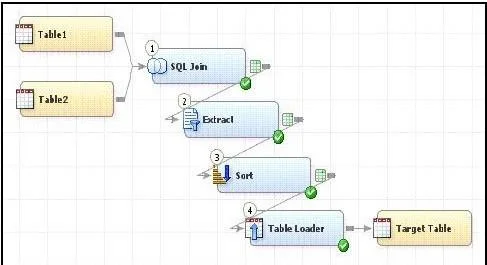
In the following display, can status handling be enabled for the Extract transformation?
The correct answer is B. Yes. The Return Code Check transformation can be added to the END of the job flow - the Status. Option B is correct because even though the Extract transformation lacks a built-in Status Handling tab, status handling can still be enabled - just indirectly. The Return Code Check transformation serves as the mechanism, and it must be placed at the end of the job flow to…
Question
In the following display, can status handling be enabled for the Extract transformation?
Exhibit
Options
- ANo. The Extract transformation does not have a status handling tab in its Properties window, and
- BYes. The Return Code Check transformation can be added to the END of the job flow - the Status
- CNo. The Extract transformation does not have a Status Handling tab in its Properties window,
- DYes. The Return Code Check transformation can be added to the job flow immediately following
How the community answered
(56 responses)- A4% (2)
- B75% (42)
- C16% (9)
- D5% (3)
Explanation
Option B is correct because even though the Extract transformation lacks a built-in Status Handling tab, status handling can still be enabled - just indirectly. The Return Code Check transformation serves as the mechanism, and it must be placed at the end of the job flow to properly evaluate the Extract's exit/return code and trigger appropriate status handling logic.
Options A and C are both wrong for the same core reason: they claim status handling is impossible, which is incorrect. The absence of a native Status Handling tab does not mean status handling is unavailable - the Return Code Check transformation fills that role. (A and C likely differ only in minor wording, making them close distractors designed to test careful reading.)
Option D is wrong because it places the Return Code Check transformation immediately after the Extract transformation, not at the end of the job flow. Placement matters - inserting it too early in the flow means it runs before the full job completes, which would not correctly capture the final status.
Memory tip: Think "END = B." The Return Code Check works like a final judge - it must wait at the end of the flow to render a verdict on what happened. If it jumps in too early (D), it rules before all the evidence is in.
Topics
Community Discussion
No community discussion yet for this question.