
A00-260 · Question #1
In the following display, can status handling be enabled for both the Extract transformation and the Sort transformation?
The correct answer is C. Yes. The Return Code Check transformation can be added to the job flow twice, once. Option C is correct because in this ETL job flow tool (likely IBM DataStage), the Return Code Check transformation is reusable - it can be inserted into the job flow multiple times, once immediately after the Extract transformation and once after the Sort transformation…
Question
In the following display, can status handling be enabled for both the Extract transformation and the Sort transformation?
Exhibit
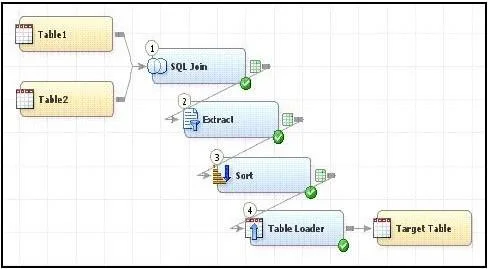
Options
- AYes. The Return Code Check transformation can be added to the job flow immediately
- BNo. Both the Extract and the Sort transformations do not have a Status Handling tab in their
- CYes. The Return Code Check transformation can be added to the job flow twice, once
- DYes. The status handling tab in the job properties window will allow you to select which
How the community answered
(46 responses)- A4% (2)
- B2% (1)
- C80% (37)
- D13% (6)
Explanation
Option C is correct because in this ETL job flow tool (likely IBM DataStage), the Return Code Check transformation is reusable - it can be inserted into the job flow multiple times, once immediately after the Extract transformation and once after the Sort transformation, independently capturing and evaluating the return/status code of each.
Why the distractors are wrong:
- A is wrong because adding the Return Code Check once (immediately, without specifying placement) would only capture status for one transformation, not both - it doesn't automatically cover the entire flow.
- B is wrong in its premise: the transformations can support status handling; the absence of a dedicated "Status Handling tab" doesn't mean status handling is impossible - it's handled externally via the Return Code Check transformation.
- D is wrong because there is no single job-level status handling tab that lets you select which transformation to monitor from one central location; handling must be wired individually in the flow.
Memory tip: Think of the Return Code Check as a reusable "checkpoint" block you snap into a pipeline - just like you can add multiple checkpoints on a highway, you can add multiple Return Code Check transformations, one per stage you want to monitor. One block = one monitored stage.
Topics
Community Discussion
No community discussion yet for this question.