
70-768 · Question #19
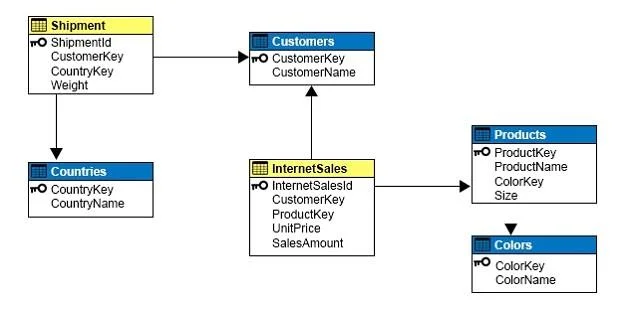
Note: This question is part of a series of questions that use the same or similar answer choices. An answer choice may be correct for more than one question in the series. Each question is…
The correct answer is E. many-to-many. Many to Many Dimension Relationships. In most dimensions, each fact joins to one and only one dimension member, and a single dimension member can be associated with multiple facts. In relational database terminology, this is referred to as a one-to-many relationship. However…
Question
Exhibit
Options
- Ano relationship
- Bregular
- Cfact
- Dreferenced
- Emany-to-many
- Fdata mining
How the community answered
(51 responses)- A14% (7)
- B4% (2)
- D2% (1)
- E73% (37)
- F8% (4)
Explanation
Many to Many Dimension Relationships. In most dimensions, each fact joins to one and only one dimension member, and a single dimension member can be associated with multiple facts. In relational database terminology, this is referred to as a one-to-many relationship. However, it is frequently useful to join a single fact to multiple dimension members. For example, a bank customer might have multiple accounts (checking, saving, credit card, and investment accounts), and an account can also have joint or multiple owners. The Customer dimension constructed from such relationships would then have multiple members that relate to a single account transaction. https://docs.microsoft.com/en-us/sql/analysis-services/multidimensional-models-olap-logical- cube-objects/dimension-relationships
Topics
Community Discussion
No community discussion yet for this question.