
70-696 · Question #118
You configure Endpoint Protection within the System Center Configuration Manager (SCCM) console. You create custom client device settings that will contain the Endpoint Protection client settings…
The correct answer is C. Install the Endpoint Protection point site system role. You should install the Endpoint Protection point site system role. If you do not have this role installed the Endpoint Protection client settings will be unavailable to configure. When the Endpoint Protection point site system role is installed you are able to configure the…
Question
You configure Endpoint Protection within the System Center Configuration Manager (SCCM) console. You create custom client device settings that will contain the Endpoint Protection client settings. However, when you try to enable the management of the Endpoint Protection client in your custom client device settings you realize all the settings are grayed out as shown in the exhibit. You need to be able to configure these settings from the console. What should you do?
Exhibit
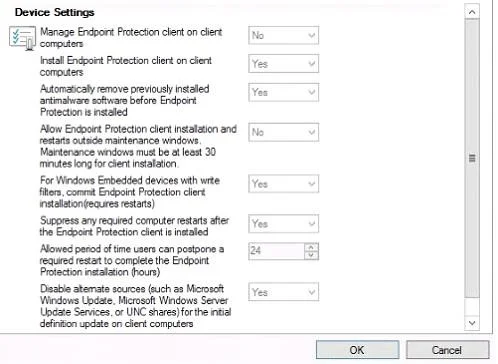
Options
- AInstall the Software Update point site system role.
- BInstall the Endpoint Protection client on your client computers.
- CInstall the Endpoint Protection point site system role.
- DCreate and configure an Antimalware policy.
How the community answered
(54 responses)- A6% (3)
- B2% (1)
- C81% (44)
- D11% (6)
Explanation
You should install the Endpoint Protection point site system role. If you do not have this role installed the Endpoint Protection client settings will be unavailable to configure. When the Endpoint Protection point site system role is installed you are able to configure the settings You should not install the Software Update point site system role. The Software Update point site system role is necessary if you want to deploy definition updates for Endpoint Protection from SCCM. You are also able to update definitions on your clients through Windows Server Update Services (WSUS), the Malware Protection Center, or a network share. You do not need the Software Update Point site system role to enable the Endpoint Protection client device settings. You should not create and configure an Antimalware policy to configure the client settings. Antimalware policies allow you to configure certain settings for the Endpoint Protection client after it is installed. These settings include scan schedules, real-time protection, and exclusions. You should not install the Endpoint Protection client on your client computers to configure the client settings. You would first need client settings enabled to install the Endpoint Protection
Topics
Community Discussion
No community discussion yet for this question.