
70-516 · Question #178
You use Microsoft Visual Studio 2010 and Microsoft .NET Framework 4.0 to create an application. You create stored procedures by using the following signatures: CREATE procedure…
Sign in or unlock 70-516 to reveal the answer and full explanation for question #178. The question stem and answer options stay visible for context.
Question
You use Microsoft Visual Studio 2010 and Microsoft .NET Framework 4.0 to create an application. You create stored procedures by using the following signatures:
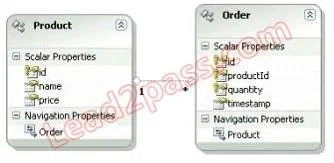
CREATE procedure [dbo].[Product_Insert](@name varchar(50),@price float) CREATE procedure [dbo].[Product_Update](@id int, @name varchar(50), @price float) CREATE procedure [dbo].[Product_Delete](@id int) CREATE procedure [dbo].[Order_Insert](@productId int, @quantity int) CREATE procedure [dbo].[Order_Update](@id int, @quantity int,@originalTimestamp timestamp) CREATE procedure [dbo].[Order_Delete](@id int) You create a Microsoft ADO.NET Entity Data Model (EDM) by using the Product and Order entities as shown in the exhibit:
You need to map the Product and Order entities to the stored procedures. To which two procedures should you add the @productId parameter? (Each correct answer presents part of the solution. Choose two.)
Exhibit
Options
- AProduct_Delete
- BProduct_Update
- COrder_Delete
- DOrder_Update
Unlock 70-516 to see the answer
You've previewed enough free 70-516 questions. Unlock 70-516 for full answers, explanations, the timed quiz mode, progress tracking, and the master PDF. Question stem and options stay visible so you can still see what's on the exam.