
70-466 · Question #148
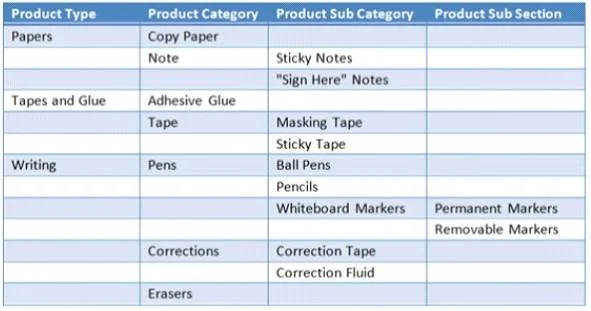
You are developing a SQL Server Analysis Services (SSAS) cube. You must create a four-level hierarchy for the employee dimension. Each level must be associated with an attribute in the employee…
The correct answer is C. A ragged hierarchy. When a hierarchy has members that do not have values at every level, a ragged hierarchy is the correct design choice to suppress logically missing members from reporting tools.
Question
Exhibit
Options
- AA parent-child hierarchy
- BA sparse hierarchy
- CA ragged hierarchy
- DA balanced hierarchy
How the community answered
(23 responses)- A4% (1)
- C91% (21)
- D4% (1)
Why each option
When a hierarchy has members that do not have values at every level, a ragged hierarchy is the correct design choice to suppress logically missing members from reporting tools.
A parent-child hierarchy is used for recursive self-referencing relationships (like employee-manager), not for fixed-level hierarchies with unequal depth.
Sparse is not a standard SSAS hierarchy type - sparsity refers to empty cells in the cube data space, not to missing levels in a dimension hierarchy.
A ragged hierarchy is specifically designed for dimensions where members do not have a uniform depth across all branches - exactly the scenario where one third of members have only three of four levels populated. SSAS provides the HideMemberIf property on ragged hierarchies to suppress logically missing members so they do not appear in reporting tools.
A balanced hierarchy requires that all members at every branch share the same depth, which contradicts the scenario where one third of members only have three levels.
Concept tested: SSAS ragged hierarchy with HideMemberIf
Source: https://learn.microsoft.com/en-us/analysis-services/multidimensional-models/dimension-attribute-properties-reference
Topics
Community Discussion
No community discussion yet for this question.