
70-465 · Question #33
Drag and Drop Question You plan to deploy a database to SQL Azure. You are designing two stored procedures named USP_1 and USP_2 that have the following requirements: - Prevent data read by USP_1…
The correct answer is repeatable read; read uncommitted. USP_1 requires 'repeatable read' because this isolation level prevents other transactions from modifying data that has been read by the current transaction (by holding shared locks until the transaction completes), satisfying the requirement to prevent modifications by other…
Question
Exhibit
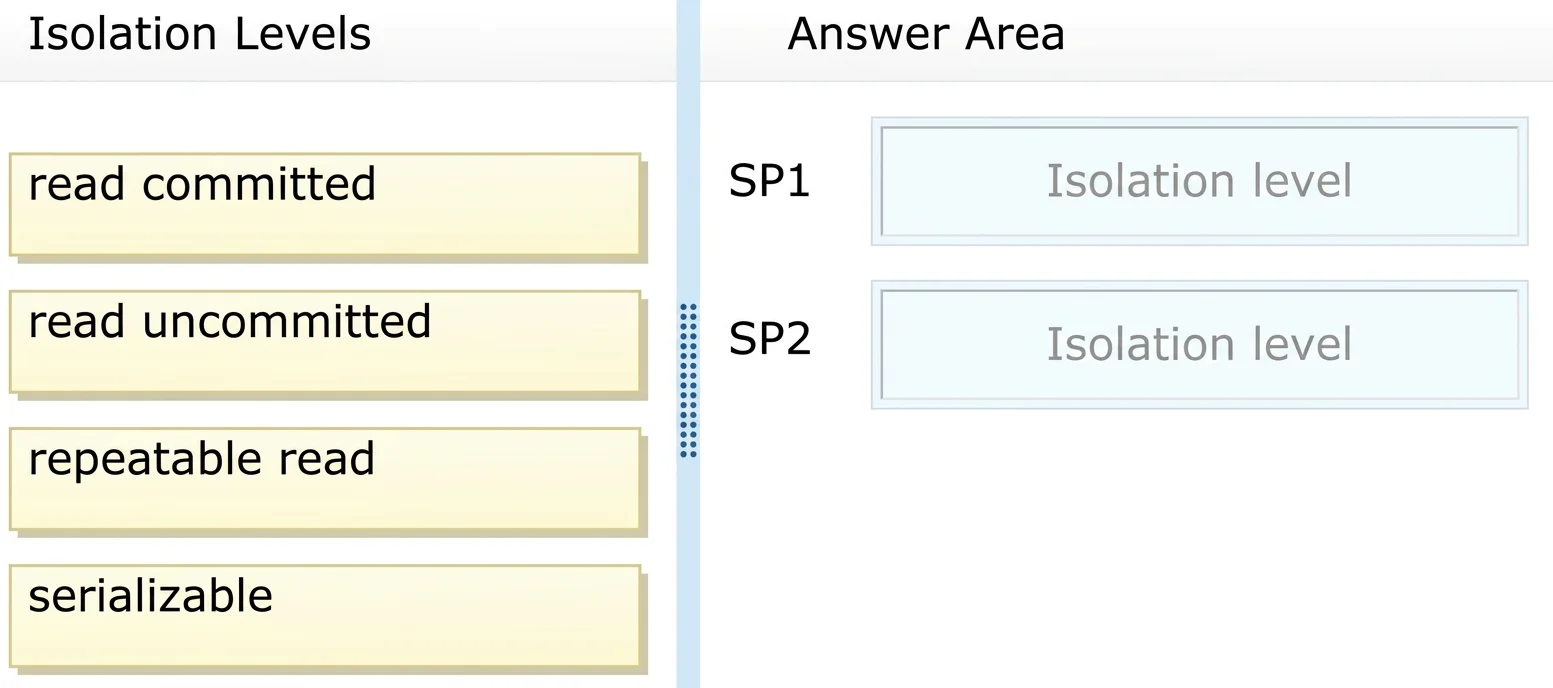
Answer Area
Drag items
Correct arrangement
- repeatable read
- read uncommitted
Explanation
USP_1 requires 'repeatable read' because this isolation level prevents other transactions from modifying data that has been read by the current transaction (by holding shared locks until the transaction completes), satisfying the requirement to prevent modifications by other active processes while still maximizing concurrency compared to 'serializable'. USP_2 requires 'read uncommitted' because this is the only isolation level that allows dirty reads - reading data that has been modified but not yet committed by other transactions - which directly matches the requirement. 'Repeatable read' is chosen over 'serializable' for USP_1 because 'serializable' adds range locks to prevent phantom reads, which is unnecessarily restrictive and reduces concurrency beyond what is needed.
Topics
Community Discussion
No community discussion yet for this question.