
70-465 · Question #20
Drag and Drop Question You plan to deploy SQL Server 2014. You are designing two stored procedures named SP1 and SP2 that have the following requirements: - Prevent data read by SP1 from being…
The correct answer is repeatable read; read committed. SP1 requires 'repeatable read' because this isolation level prevents other transactions from modifying data that has been read within the current transaction (preventing non-repeatable reads), while still allowing concurrent reads - it is the minimum level that satisfies this…
Question
Exhibit
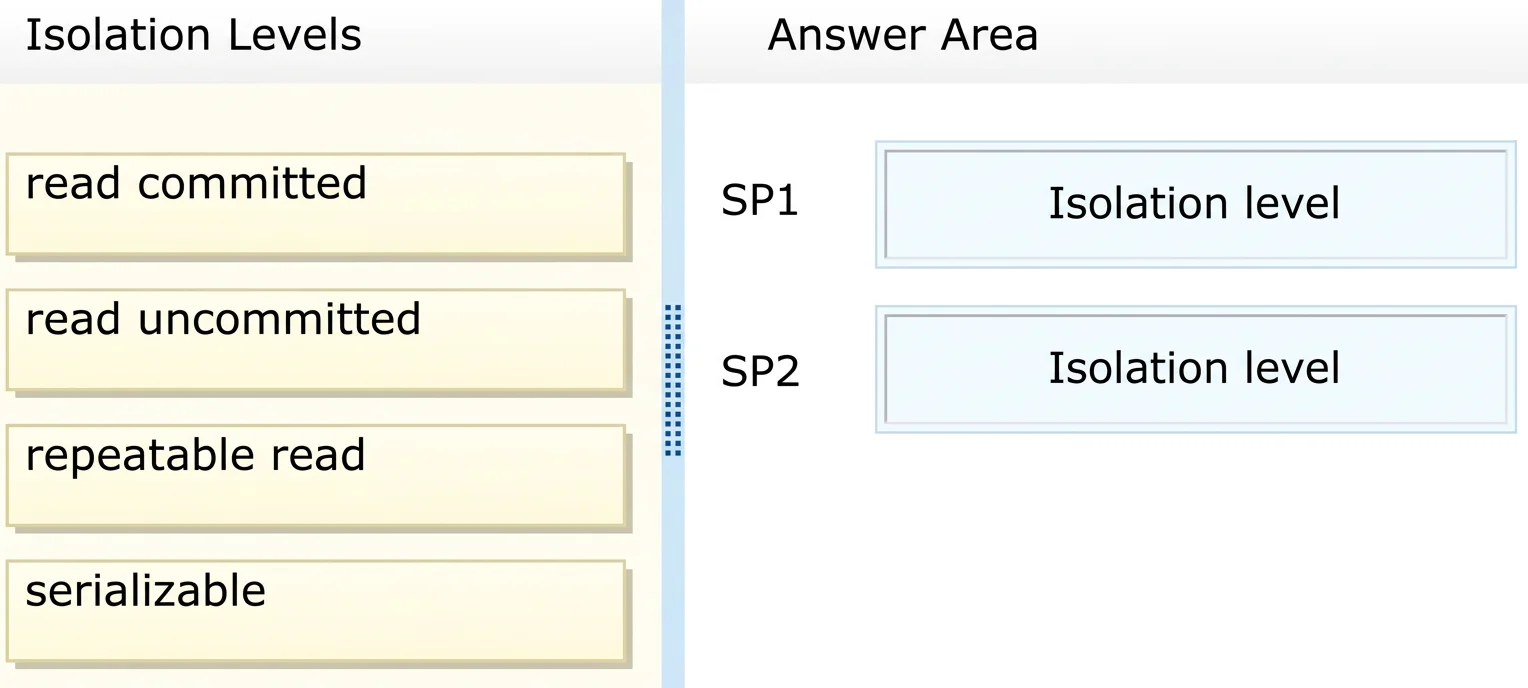
Answer Area
Drag items
Correct arrangement
- repeatable read
- read committed
Explanation
SP1 requires 'repeatable read' because this isolation level prevents other transactions from modifying data that has been read within the current transaction (preventing non-repeatable reads), while still allowing concurrent reads - it is the minimum level that satisfies this requirement with maximum concurrency. SP2 only needs to prevent dirty reads (reading uncommitted data from other transactions), and 'read committed' is the lowest isolation level that achieves this, maximizing concurrency by only holding shared locks for the duration of the read operation rather than the entire transaction.
Topics
Community Discussion
No community discussion yet for this question.