
70-463 · Question #248
You have a SQL Server Integration Services (SSIS) package that is configured as shown in the exhibit. (Click the Exhibit button.) You need to recommend changes to the package to reduce load times…
The correct answer is B. Add an Execute SQL task that batch-updates changed rows. E. Remove the OLE DB command and use an OLE DB destination. If the OLE DB destination uses a fast-load data access mode, you can specify the following fast load options in the user interface, OLE DB Destination Editor, for the destination: Keep identity values from the imported data file or use unique values assigned by SQL Server…
Question
You have a SQL Server Integration Services (SSIS) package that is configured as shown in the exhibit. (Click the Exhibit button.) You need to recommend changes to the package to reduce load times. Which two changes should you recommend? Each correct answer presents part of the solution.
Exhibit
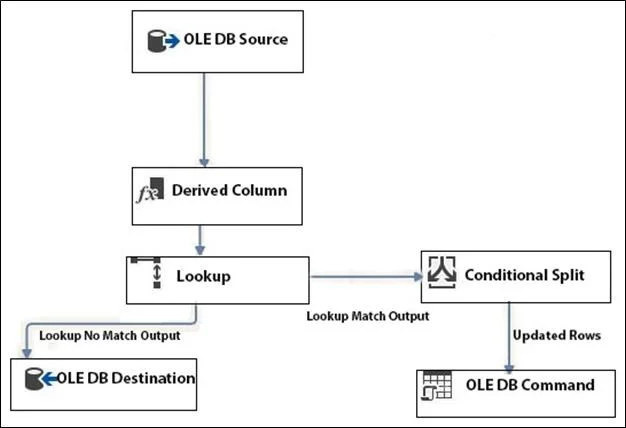
Options
- ARemove the OLE DB command and use a Script task.
- BAdd an Execute SQL task that batch-updates changed rows.
- CSet the ValidateExternalMetadata property to False.
- DAdd an Execute SQL task that truncates and reloads the table.
- ERemove the OLE DB command and use an OLE DB destination.
How the community answered
(34 responses)- A6% (2)
- B74% (25)
- C6% (2)
- D15% (5)
Explanation
If the OLE DB destination uses a fast-load data access mode, you can specify the following fast load options in the user interface, OLE DB Destination Editor, for the destination: Keep identity values from the imported data file or use unique values assigned by SQL Server. Retain a null value during the bulk load operation. Check constraints on the target table or view during the bulk import operation. Acquire a table-level lock for the duration of the bulk load operation. Specify the number of rows in the batch and the commit size. destination? view=sql-server-2017#fast-load-options
Topics
Community Discussion
No community discussion yet for this question.