
70-450 · Question #33
You are a professional level SQL Sever 2008 Database Administrator. The largest table in a database is partitioned into four equal-sized parts. The first two partitions are seldom queried, while the…
The correct answer is A. PAGE compression should be enabled for the first two partitions. C. ROW compression should be enabled for the third partition. The two first partition are seldom queried, this means that we can compress to the maximum the data in the partition. Page compression will be use as it removes duplicate pattern and compress to the max the data The Third partition is regularly queried, this means that the…
Question
You are a professional level SQL Sever 2008 Database Administrator. The largest table in a database is partitioned into four equal-sized parts. The first two partitions are seldom queried, while the third partition is regularly queried by several reports. Meanwhile, the fourth partition is heavily queried and regularly modified. The disk space of the table should be cut to the least and the query performance should be with the least impact. What will you do? (Choose more than one.)
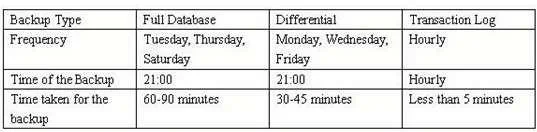
Exhibit
Options
- APAGE compression should be enabled for the first two partitions.
- BROW compression should be enabled for the last partition.
- CROW compression should be enabled for the third partition.
- DROW compression should be enabled for the first two partitions.
- EPAGE compression should be enabled for the last partition.
- FPAGE compression should be enabled for the third partition.
How the community answered
(30 responses)- A73% (22)
- B7% (2)
- D3% (1)
- E13% (4)
- F3% (1)
Explanation
The two first partition are seldom queried, this means that we can compress to the maximum the data in the partition. Page compression will be use as it removes duplicate pattern and compress to the max the data The Third partition is regularly queried, this means that the partition should be @ht. Thus, the ROW compression is more adequate tor this partition.
Topics
Community Discussion
No community discussion yet for this question.