
350-901 · Question #70
Refer to the exhibit above and click on the tab in the top left corner to view a diagram that describes the typical flow of requests involved when a webhook is created for a booking service. Drag…
This question tests your understanding of the end-to-end HTTP request flow in a webhook-based architecture, specifically how a booking update in a web application triggers a chain of synchronous API calls and asynchronous webhook notifications to subscribed consumers.
Question
Exhibit
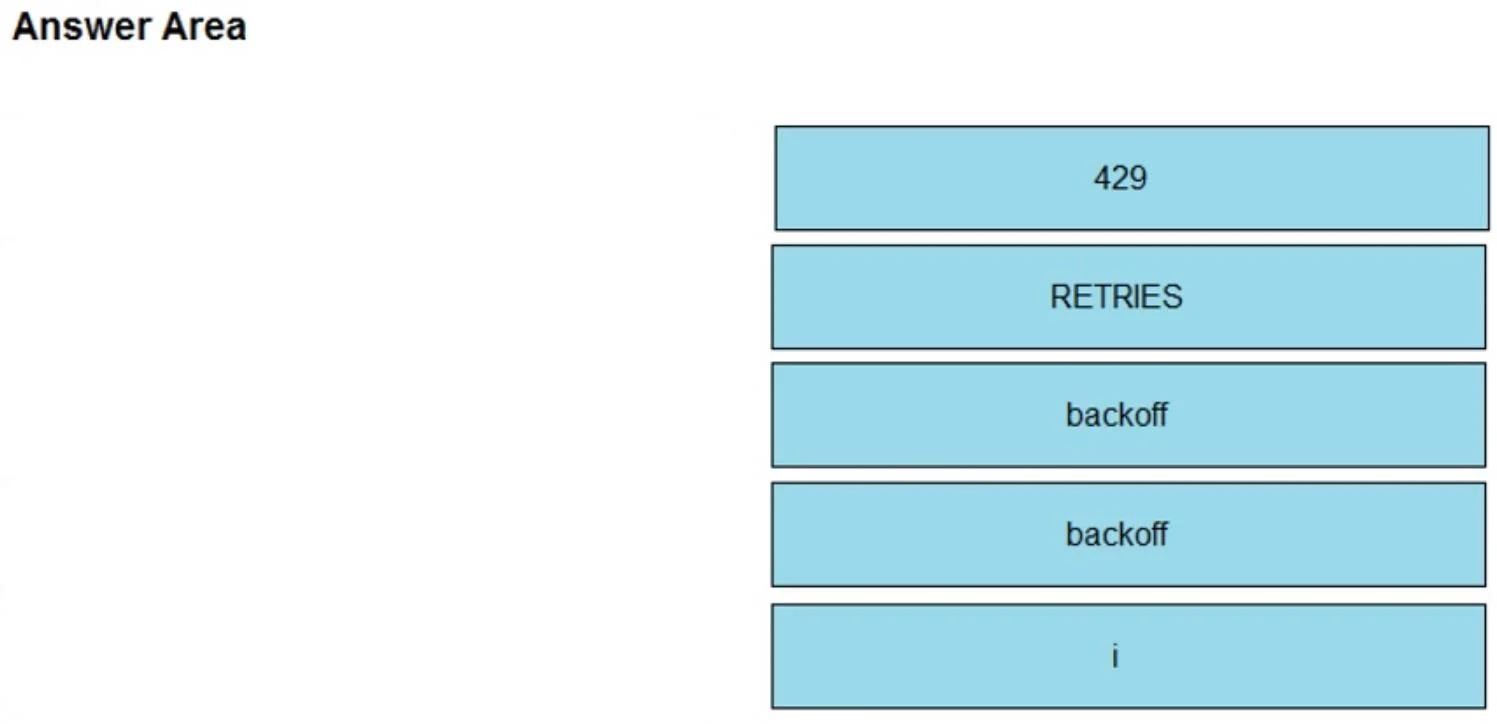
Explanation
This question tests your understanding of the end-to-end HTTP request flow in a webhook-based architecture, specifically how a booking update in a web application triggers a chain of synchronous API calls and asynchronous webhook notifications to subscribed consumers.
Approach. The correct sequence follows this pattern: (1) The web application sends an HTTP PUT/PATCH request to the Booking Service API to update the booking. (2) The Booking Service persists the change to its database and returns a 200 OK to the web app. (3) The Booking Service then sends an HTTP POST request (the webhook event payload) to the registered webhook consumer/subscriber URL, containing the updated booking data. (4) The webhook consumer acknowledges receipt with an HTTP 200 OK response back to the Booking Service. Each numbered gap in the sequence diagram corresponds to one of these directional HTTP calls - you must correctly identify whether a request is originating from the client, the booking service, or the webhook consumer, and whether it is the initial update, a persistence step, a notification dispatch, or an acknowledgment.
Concept tested. Webhook request flow and event-driven architecture: understanding the full lifecycle of a webhook from the triggering client action (booking update), through the API processing layer, database persistence, outbound webhook POST notification to a subscriber, and the subscriber's acknowledgment response - as represented in a UML sequence diagram.
Reference. Webhook design patterns; HTTP/REST API interaction models; UML sequence diagrams - commonly tested in API design, cloud integration, and developer certification exams (e.g., AWS Developer, Google Cloud Associate, or vendor-specific API platform certifications).
Topics
Community Discussion
No community discussion yet for this question.