
350-801 · Question #97
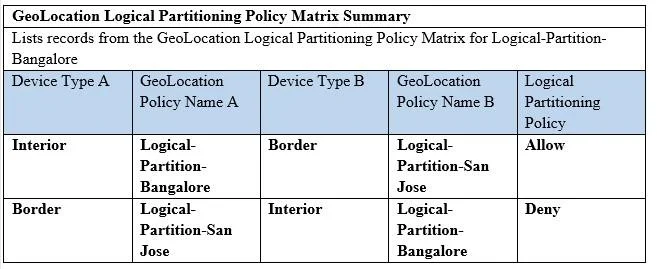
Refer to the exhibit. Assume that the bottom logical partition policy entry in Cisco Unified Communications Manager was provisioned last. How is the call treated when an IP phone in the Bangalore…
The correct answer is A. The call is denied because the last added logical partition policy takes precedence when multiple. This question describes a call scenario with multiple logical partition policies in CUCM and asks how the call is treated based on policy precedence.
Question
Refer to the exhibit. Assume that the bottom logical partition policy entry in Cisco Unified Communications Manager was provisioned last. How is the call treated when an IP phone in the Bangalore GeoLocation places a call to a MGCP gateway with FXS ports in the San Jose GeoLocation?
Exhibit
Options
- AThe call is denied because the last added logical partition policy takes precedence when multiple
- BThe call is allowed because the first listed logical partition policy takes precedence when multiple
- CThe call is denied because the call flow matches neither policy entries.
- DThe call is allowed because the call flow matches neither policy entries.
- EThe call is allowed because only the top policy entry matches the call flow.
How the community answered
(48 responses)- A73% (35)
- B6% (3)
- C4% (2)
- D15% (7)
- E2% (1)
Why each option
This question describes a call scenario with multiple logical partition policies in CUCM and asks how the call is treated based on policy precedence.
In Cisco Unified Communications Manager's logical partition policy, when multiple entries match a call flow, the most recently provisioned (last added or modified) policy takes precedence. If this last provisioned policy results in a denial, the call will be denied.
This statement is incorrect because CUCM's logical partition policy logic dictates that the most recently provisioned policy takes precedence, not the first listed.
This implies no match, but the question implies that the policies are relevant to the call flow, making precedence the key factor.
Similar to C, this implies no match, which is not the core issue when discussing policy precedence.
This contradicts the rule of precedence where the last provisioned policy is considered, not necessarily the top one, and assumes a specific match that isn't the primary point of the question.
Concept tested: CUCM Logical Partition Policy precedence
Source: https://www.cisco.com/c/en/us/td/docs/voice_ip_comm/cucm/srnd/collab12/collab12/locations.html
Topics
Community Discussion
No community discussion yet for this question.