
350-701 · Question #225
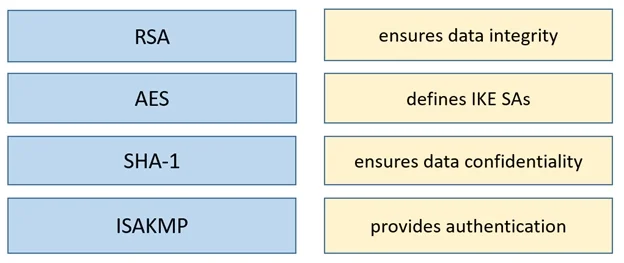
Drag and Drop Question Drag and drop the VPN functions from the left onto the description on the right. Answer:
The correct answer is SHA-1; ISAKMP; AES; RSA. The correct arrangement matches each VPN function to its description based on its cryptographic role: SHA-1 is a hashing algorithm used for data integrity verification, ISAKMP is the framework/protocol used to negotiate, establish, and manage Security Associations (SAs) in VPN…
Question
Drag and Drop Question Drag and drop the VPN functions from the left onto the description on the right. Answer:
Exhibit
Answer Area
Drag items
Correct arrangement
- SHA-1
- ISAKMP
- AES
- RSA
Explanation
The correct arrangement matches each VPN function to its description based on its cryptographic role: SHA-1 is a hashing algorithm used for data integrity verification, ISAKMP is the framework/protocol used to negotiate, establish, and manage Security Associations (SAs) in VPN tunnels, AES is a symmetric encryption algorithm used for bulk data encryption (confidentiality), and RSA is an asymmetric algorithm used for key exchange and digital signatures (authentication). Each option serves a distinct and non-interchangeable role in VPN architecture, covering the four pillars: integrity, key management, encryption, and authentication.
Topics
Community Discussion
No community discussion yet for this question.