
350-601 · Question #92
Which statement about the MAC address that the FCoE Initialization Protocol chooses for use by an E-Node in an FCoE implementation is true?
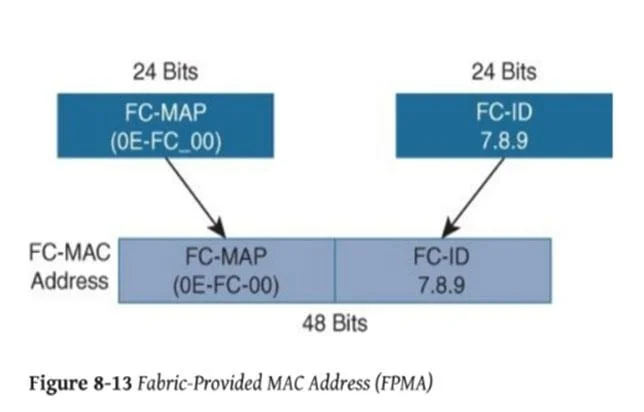
The correct answer is A. The FCoE Initialization Protocol uses a 24-bit FC-MAP and concatenates a 24-bit Fibre Channel. FCoE uses a Fabric Provided MAC Address (FPMA) for SAN traffic. The ENode still gets a 24-bit FCID. FPMA is built by concatenating a 24-bit FCoE MAC address prefix (FC-MAP), ranging from 0x0E-FC-00 to 0x0E-FC-FF, to the 24-bit FCID, as shown in Figure 8-13. Being able to build…
Question
Which statement about the MAC address that the FCoE Initialization Protocol chooses for use by an E-Node in an FCoE implementation is true?
Exhibit
Options
- AThe FCoE Initialization Protocol uses a 24-bit FC-MAP and concatenates a 24-bit Fibre Channel
- BThe FCoE Initialization Protocol uses the burned-in MAC address of the converged network
- CFCoE does not use a MAC address. The FCoE Initialization Protocol is used to acquire a Fibre
- DThe FCoE Initialization Protocol uses 01.00.0C as the first 24 bits of the MAC address and
How the community answered
(17 responses)- A94% (16)
- D6% (1)
Explanation
FCoE uses a Fabric Provided MAC Address (FPMA) for SAN traffic. The ENode still gets a 24-bit FCID. FPMA is built by concatenating a 24-bit FCoE MAC address prefix (FC-MAP), ranging from 0x0E-FC-00 to 0x0E-FC-FF, to the 24-bit FCID, as shown in Figure 8-13. Being able to build a unique MAC address for the ENode directly from its FCID saves the switch from having to maintain a table that associates FCID and MAC addresses.
Topics
Community Discussion
No community discussion yet for this question.