
350-401 · Question #502
Router1 is currently operating as the HSRP primary with a priority of 110. Router1 fails and Router2 takes over the forwarding role. Which command on Router1 causes it to take over the forwarding…
The correct answer is B. standby 2 preempt. The standby preempt command allows a router with a higher HSRP priority to immediately assume the active role once it comes online, even if another router is currently acting as active.
Question
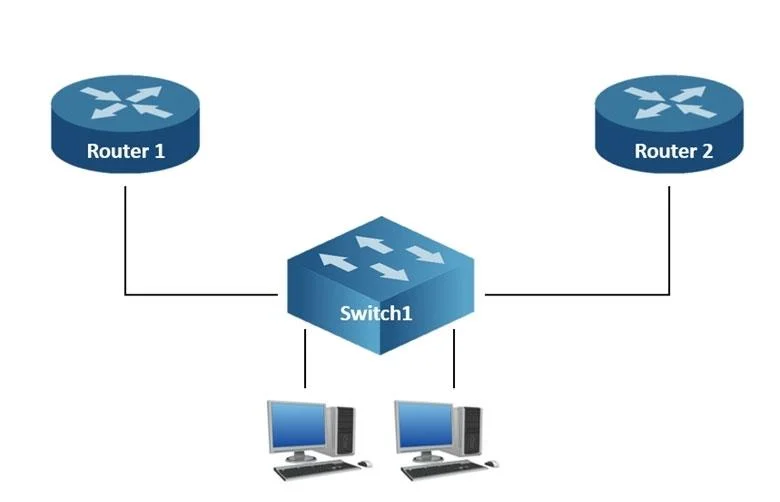
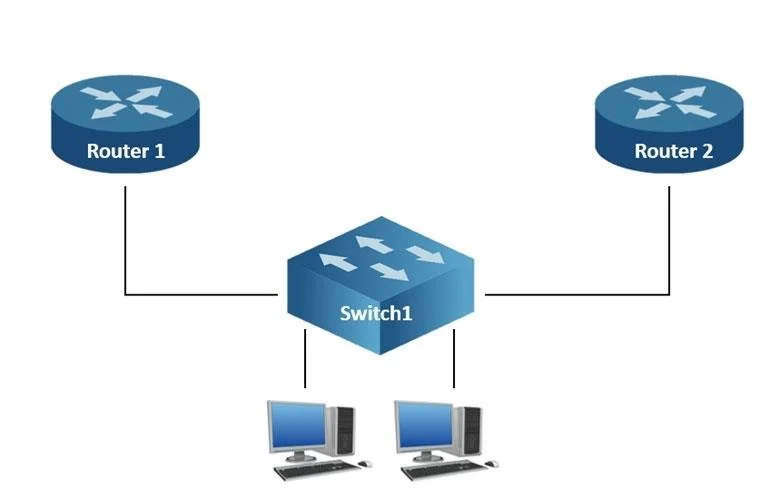
Router1 is currently operating as the HSRP primary with a priority of 110. Router1 fails and Router2 takes over the forwarding role. Which command on Router1 causes it to take over the forwarding role when it returns to service?
Exhibits
Options
- Astandby 2 priority
- Bstandby 2 preempt
- Cstandby 2 track
- Dstandby 2 timers
How the community answered
(49 responses)- A10% (5)
- B80% (39)
- C4% (2)
- D6% (3)
Why each option
The `standby preempt` command allows a router with a higher HSRP priority to immediately assume the active role once it comes online, even if another router is currently acting as active.
The `standby 2 priority` command only sets the priority for HSRP group 2; it does not enable the router to actively take over if it returns to service and has a higher priority.
The `standby 2 preempt` command enables preemption for HSRP group 2, allowing Router1 to reclaim the active role immediately upon recovery since it has a higher priority (110) than other routers (which would likely have the default priority of 100 or less) after a failure.
The `standby 2 track` command links HSRP priority to the state of an interface or object, dynamically reducing priority if tracked items fail, but it does not enable preemption.
The `standby 2 timers` command configures the hello and hold timers for HSRP group 2, which affects detection of failures but not the immediate re-assumption of the active role.
Concept tested: HSRP preemption configuration
Source: https://www.cisco.com/c/en/us/td/docs/ios/ipapp/configuration/guide/ipapp_c/iap_hsrp.html
Topics
Community Discussion
No community discussion yet for this question.