
350-401 · Question #1312
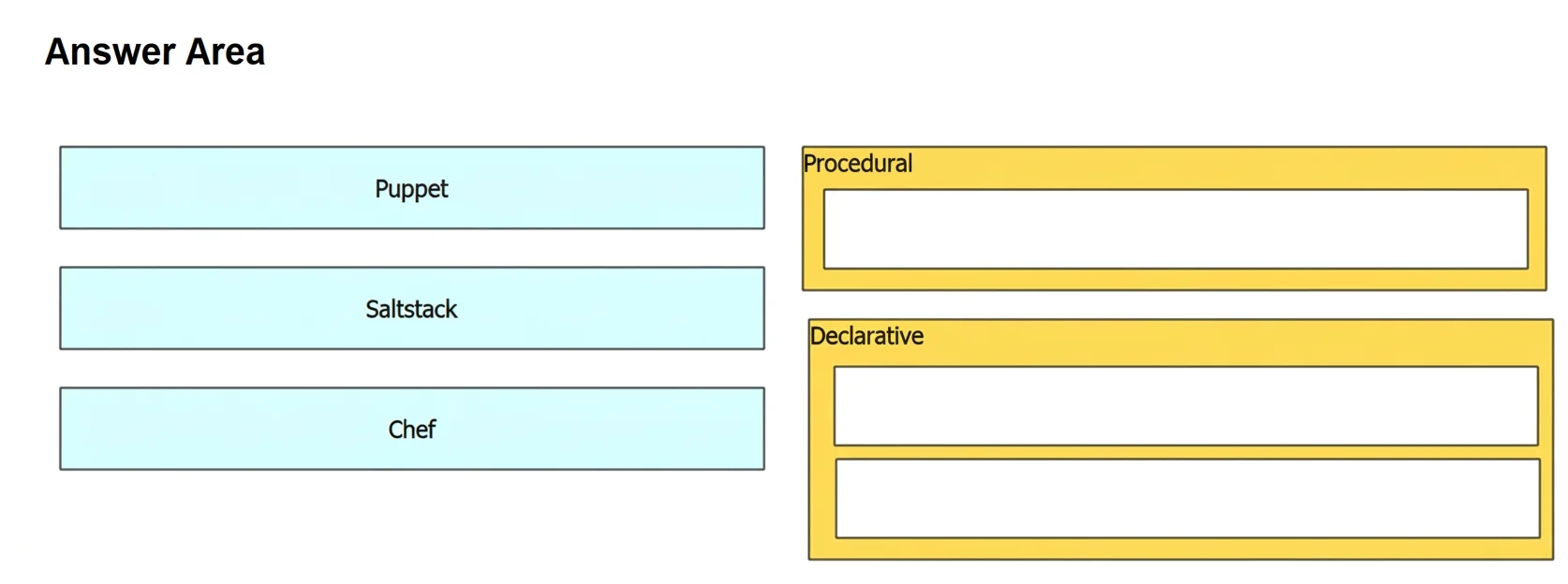
Drag and Drop Question Drag and drop the configuration management tools from the left onto the configuration styles they use on the right. Answer:
The correct answer is Chef; Puppet; Saltstack. The correct arrangement maps each tool to its configuration style: Chef uses a procedural/imperative style (Ruby-based DSL called 'recipes'), Puppet uses a declarative style (its own DSL where you define the desired state), and SaltStack uses an event-driven/remote execution…
Question
Exhibit
Answer Area
Drag items
Correct arrangement
- Chef
- Puppet
- Saltstack
Explanation
The correct arrangement maps each tool to its configuration style: Chef uses a procedural/imperative style (Ruby-based DSL called 'recipes'), Puppet uses a declarative style (its own DSL where you define the desired state), and SaltStack uses an event-driven/remote execution style with both declarative and imperative capabilities via YAML-based state files (SLS). These distinctions are foundational to understanding how each tool approaches infrastructure automation - Chef tells the system how to get to a state, Puppet tells it what state to achieve, and SaltStack orchestrates configuration through a master-minion event bus model.
Topics
Community Discussion
No community discussion yet for this question.