
312-50V7 · Question #55
Fake Anti-Virus, is one of the most frequently encountered and persistent threats on the web. This malware uses social engineering to lure users into infected websites with a technique called Search…
Sign in or unlock 312-50V7 to reveal the answer and full explanation for question #55. The question stem and answer options stay visible for context.
Question
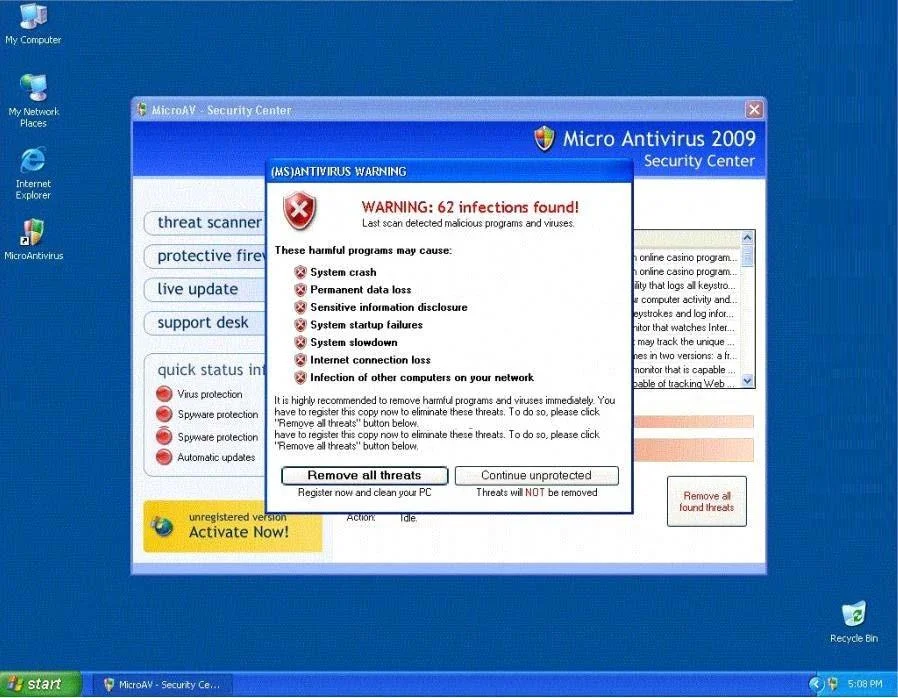
Fake Anti-Virus, is one of the most frequently encountered and persistent threats on the web. This malware uses social engineering to lure users into infected websites with a technique called Search Engine Optimization. Once the Fake AV is downloaded into the user's computer, the software will scare them into believing their system is infected with threats that do not really exist, and then push users to purchase services to clean up the non-existent threats. The Fake AntiVirus will continue to send these annoying and intrusive alerts until a payment is made. What is the risk of installing Fake AntiVirus?
Exhibit
Options
- AVictim's Operating System versions, services running and applications installed will be published on
- BVictim's personally identifiable information such as billing address and credit card details, may be extracted
- COnce infected, the computer will be unable to boot and the Trojan will attempt to format the hard disk
- DDenial of Service attack will be launched against the infected computer crashing other machines on the
Unlock 312-50V7 to see the answer
You've previewed enough free 312-50V7 questions. Unlock 312-50V7 for full answers, explanations, the timed quiz mode, progress tracking, and the master PDF. Question stem and options stay visible so you can still see what's on the exam.