
312-50V7 · Question #43
A common technique for luring e-mail users into opening virus-launching attachments is to send messages that would appear to be relevant or important to many of their potential recipients. One way…
The correct answer is A. Verify the digital signature attached with the mail, the fake mail will not have Digital ID at all. See the full explanation below for the reasoning.
Question
A common technique for luring e-mail users into opening virus-launching attachments is to send messages that would appear to be relevant or important to many of their potential recipients. One way of accomplishing this feat is to make the virus-carrying messages appear to come from some type of business entity retailing sites, UPS, FEDEX, CITIBANK or a major provider of a common service. Here is a fraudulent e-mail claiming to be from FedEx regarding a package that could not be delivered. This mail asks the receiver to open an attachment in order to obtain the FEDEX tracking number for picking up the package. The attachment contained in this type of e-mail activates a virus. Vendors send e-mails like this to their customers advising them not to open any files attached with the mail, as they do not include attachments. Fraudulent e-mail and legit e-mail that arrives in your inbox contain the fedex.com as the sender of the mail. How do you ensure if the e-mail is authentic and sent from fedex.com?
Exhibit
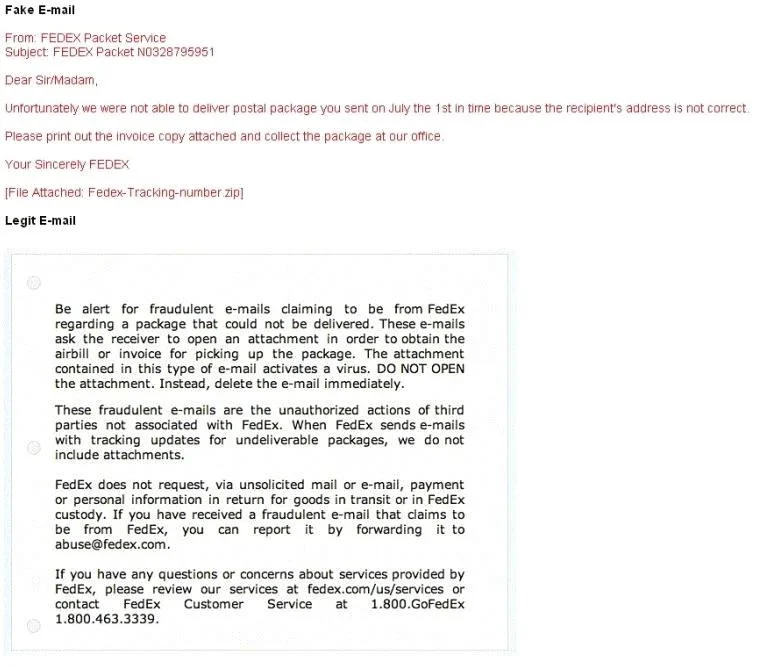
Options
- AVerify the digital signature attached with the mail, the fake mail will not have Digital ID at all
- BCheck the Sender ID against the National Spam Database (NSD)
- CFake mail will have spelling/grammatical errors
- DFake mail uses extensive images, animation and flash content
How the community answered
(44 responses)- A73% (32)
- B7% (3)
- C5% (2)
- D16% (7)
Community Discussion
No community discussion yet for this question.