
312-50V12 · Question #104
John is investigating web-application firewall logs and observers that someone is attempting to inject the following: What type of attack is this?
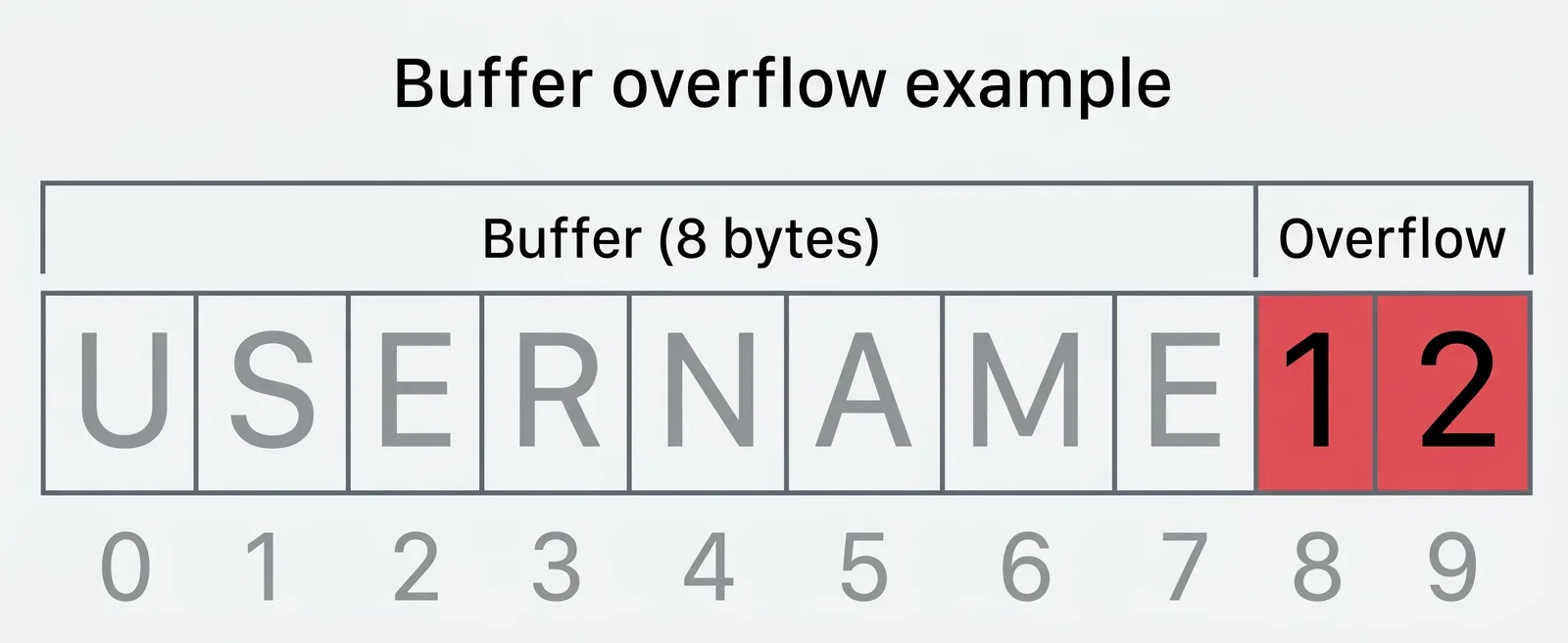
The correct answer is B. Buffer overflow. Buffer Overflow Attack Explanation Buffer overflow attacks involve sending more data than a system's allocated memory buffer can handle, causing data to overflow into adjacent memory and potentially allowing an attacker to execute malicious code or crash the application. When…
Question
Exhibit
Options
- ASQL injection
- BBuffer overflow
- CCSRF
- DXSS
How the community answered
(31 responses)- A16% (5)
- B71% (22)
- C3% (1)
- D10% (3)
Explanation
Buffer Overflow Attack Explanation
Buffer overflow attacks involve sending more data than a system's allocated memory buffer can handle, causing data to overflow into adjacent memory and potentially allowing an attacker to execute malicious code or crash the application. When examining WAF logs, a buffer overflow attempt typically appears as an abnormally long string of characters (often repeated letters like "AAAA..." or shell code) designed to overwhelm memory boundaries - which is what is being observed in this scenario.
Why the distractors are wrong:
- SQL Injection (A) would show database query syntax such as
' OR 1=1--orUNION SELECTstatements, not oversized input strings - CSRF (C) involves forging unauthorized requests on behalf of authenticated users and wouldn't appear as malicious input payloads in a WAF log
- XSS (D) would show JavaScript injection attempts like
<script>alert('xss')</script>, not memory-overflow strings
Memory Tip: Think of a buffer overflow as "overfilling a glass of water" - when you pour too much in, it spills over the edges into areas it shouldn't reach. If you see an excessively long, repetitive string in WAF logs, think Buffer Overflow, not injection-style attacks.
Topics
Community Discussion
No community discussion yet for this question.