
312-50V11 · Question #849
Susan, a software developer, wants her web API to update other applications with the latest information. For this purpose, she uses a user-defined HTTP tailback or push APIs that are raised based on…
The correct answer is B. Webhooks. Webhooks are one of a few ways internet applications will communicate with one another. It allows you to send real-time data from one application to another whenever a given event For example, let's say you've created an application using the Foursquare API that tracks when…
Question
Susan, a software developer, wants her web API to update other applications with the latest information. For this purpose, she uses a user-defined HTTP tailback or push APIs that are raised based on trigger events: when invoked, this feature supplies data to other applications so that users can instantly receive real-time Information. Which of the following techniques is employed by Susan?
Exhibit
Options
- Aweb shells
- BWebhooks
- CREST API
- DSOAP API
How the community answered
(58 responses)- A3% (2)
- B86% (50)
- C9% (5)
- D2% (1)
Explanation
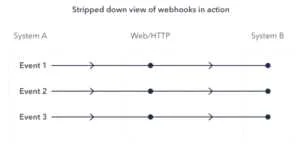
Webhooks are one of a few ways internet applications will communicate with one another. It allows you to send real-time data from one application to another whenever a given event For example, let's say you've created an application using the Foursquare API that tracks when people check into your restaurant. You ideally wish to be able to greet customers by name and provide a complimentary drink when they check in. What a webhook will is notify you any time someone checks in, therefore you'd be able to run any processes that you simply had in your application once this event is triggered. The data is then sent over the web from the application wherever the event originally occurred, to the receiving application that handles the data. Here's a visual representation of what that looks like: A webhook url is provided by the receiving application, and acts as a phone number that the other application will call once an event happens. Only it's more complicated than a phone number, because data about the event is shipped to the webhook url in either JSON or XML format. this is known as the "payload." Here's an example of what a webhook url looks like with the payload it's carrying:
Topics
Community Discussion
No community discussion yet for this question.