
312-50V10 · Question #689
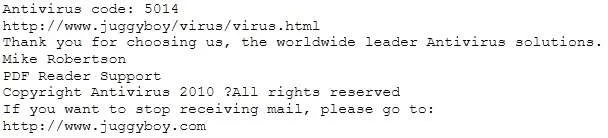
You receive an e-mail like the one shown below. When you click on the link contained in the mail, you are redirected to a website seeking you to download free Anti-Virus software. Dear valued…
The correct answer is C. Search using the URL and Anti-Virus product name into Google and lookout for suspicious. Searching the suspicious URL and product name online is the safest method to detect fake antivirus software because it exposes known threat reports without putting your system at risk.
Question
You receive an e-mail like the one shown below. When you click on the link contained in the mail, you are redirected to a website seeking you to download free Anti-Virus software. Dear valued customers, We are pleased to announce the newest version of Antivirus 2010 for Windows which will probe you with total security against the latest spyware, malware, viruses, Trojans and other online threats. Simply visit the link below and enter your antivirus code:
or you may contact us at the following address: Media Internet Consultants, Edif. Neptuno, Planta Baja, Ave. Ricardo J. Alfaro, Tumba Muerto, n/a Panama How will you determine if this is Real Anti-Virus or Fake Anti-Virus website?
Exhibit
Options
- ALook at the website design, if it looks professional then it is a Real Anti-Virus website
- BConnect to the site using SSL, if you are successful then the website is genuine
- CSearch using the URL and Anti-Virus product name into Google and lookout for suspicious
- DDownload and install Anti-Virus software from this suspicious looking site, your Windows 7 will
- EDownload and install Anti-Virus software from this suspicious looking site, your Windows 7 will
How the community answered
(59 responses)- A3% (2)
- B2% (1)
- C78% (46)
- D12% (7)
- E5% (3)
Why each option
Searching the suspicious URL and product name online is the safest method to detect fake antivirus software because it exposes known threat reports without putting your system at risk.
Professional website design is not a reliable trust indicator because threat actors deliberately invest in polished, convincing fake sites specifically to appear legitimate to victims.
An SSL/TLS connection only encrypts data in transit and confirms certificate ownership; it does not validate whether the site operator is trustworthy or whether software offered for download is safe.
Performing a web search for the URL and product name surfaces security community reports, consumer warnings, and antivirus vendor advisories that identify known rogue software campaigns. This approach requires no interaction with the suspicious site or its downloads, leveraging crowd-sourced and vendor threat intelligence to verify legitimacy before any risk is incurred.
Downloading and installing software from a suspicious site immediately exposes your system to potential malware infection, making this approach dangerous rather than a diagnostic verification method.
Downloading and installing software from a suspicious site immediately exposes your system to potential malware infection, making this approach dangerous rather than a diagnostic verification method.
Concept tested: Identifying rogue fake antivirus social engineering sites
Source: https://www.cisa.gov/resources-tools/resources/protecting-against-malicious-code
Topics
Community Discussion
No community discussion yet for this question.