
312-39 · Question #107
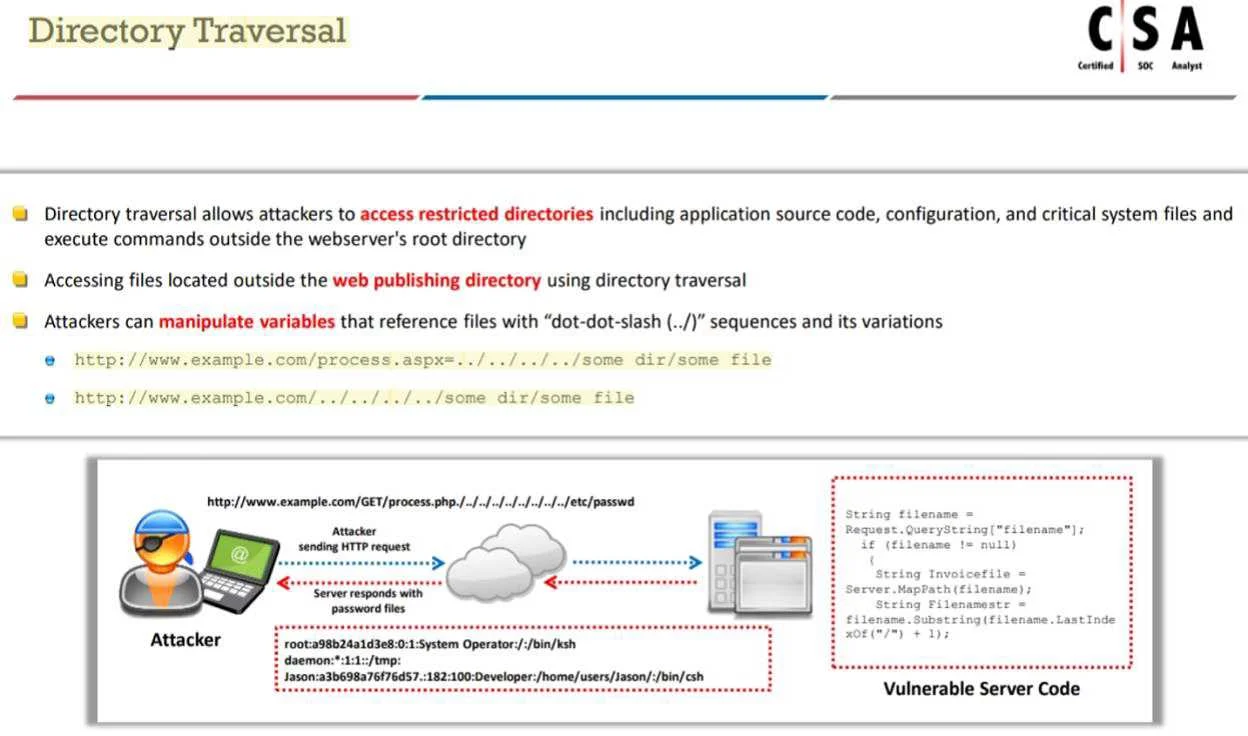
Identify the attack when an attacker by several trial and error can read the contents of a password file present in the restricted etc folder just by manipulating the URL in the browser as shown:
The correct answer is A. Directory Traversal Attack. The attack described is a Directory Traversal Attack. This type of attack occurs when an attacker exploits vulnerabilities in a web application (or a web server’s software) to gain unauthorized access to files and directories that are stored outside of the web root folder. By…
Question
Identify the attack when an attacker by several trial and error can read the contents of a password file present in the restricted etc folder just by manipulating the URL in the browser as shown:
Exhibit
Options
- ADirectory Traversal Attack
- BSQL Injection Attack
- CDenial-of-Service Attack
- DForm Tampering Attack
How the community answered
(23 responses)- A96% (22)
- D4% (1)
Explanation
The attack described is a Directory Traversal Attack. This type of attack occurs when an attacker exploits vulnerabilities in a web application (or a web server’s software) to gain unauthorized access to files and directories that are stored outside of the web root folder. By manipulating variables that directory hierarchy and access files or directories that should be restricted. This can lead to information disclosure, such as reading sensitive files like /etc/passwd, which contains user password details in Unix-based systems. the ../ pattern to navigate up from the current directory where process.php resides, aiming to reach the root directory and then descend into the /etc/ directory to access the passwd file. This is a classic example of a Directory Traversal Attack. including Directory Traversal Attacks. Specific references to this type of attack can be found in the EC- Council’s official training materials for the Certified SOC Analyst (CSA) program, such as the CSA study guide and related courses that discuss web application vulnerabilities and attacks123.
Topics
Community Discussion
No community discussion yet for this question.