
300-425 · Question #237
Refer to the exhibit. A consulting engineer is preparing to survey a greenfield deployment for a 6000-sqft building with four floors. To prepare for the predeployment survey, the engineer uses a…
The correct answer is C. Decrease the Signal Propagation Assessment height. With the default 40 ft “Signal Propagation Assessment” height, the simulator is modeling the AP as if it were mounted extremely high - well above a normal ceiling - resulting in large, unrealistic coverage “bleeding” outside the building footprint. Bringing that height down to…
Question
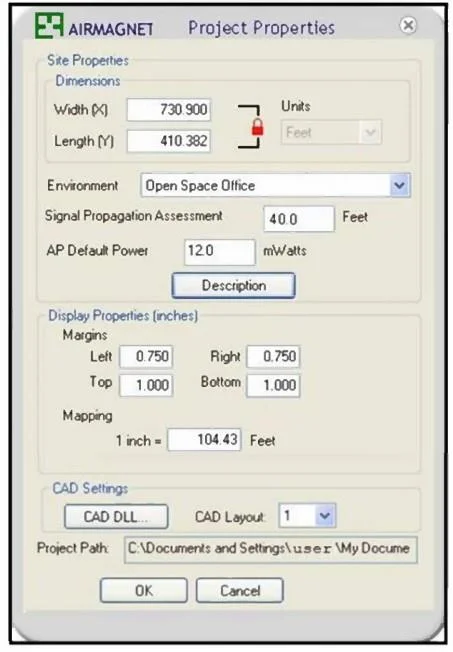
Refer to the exhibit. A consulting engineer is preparing to survey a greenfield deployment for a 6000-sqft building with four floors. To prepare for the predeployment survey, the engineer uses a third-party simulation tool. With the default settings on the tool, the survey report shows that the RF signal extends far outside the building walls or areas where data points were taken. The engineer must configure the tool with site properties based on the provided building and floor specifications. Which change must the engineer make to the survey tool?
Exhibit
Options
- AIncrease the Signal Propagation Assessment height.
- BIncrease the map dimensions to fit the extended signal.
- CDecrease the Signal Propagation Assessment height.
- DReduce the AP default power.
How the community answered
(61 responses)- A3% (2)
- B5% (3)
- C84% (51)
- D8% (5)
Explanation
With the default 40 ft “Signal Propagation Assessment” height, the simulator is modeling the AP as if it were mounted extremely high - well above a normal ceiling - resulting in large, unrealistic coverage “bleeding” outside the building footprint. Bringing that height down to a typical AP- mount height (around 8–10 ft) increases the path-loss due to walls/obstructions and pulls the predicted RF contour tightly within the building area.
Topics
Community Discussion
No community discussion yet for this question.