
300-420 · Question #97
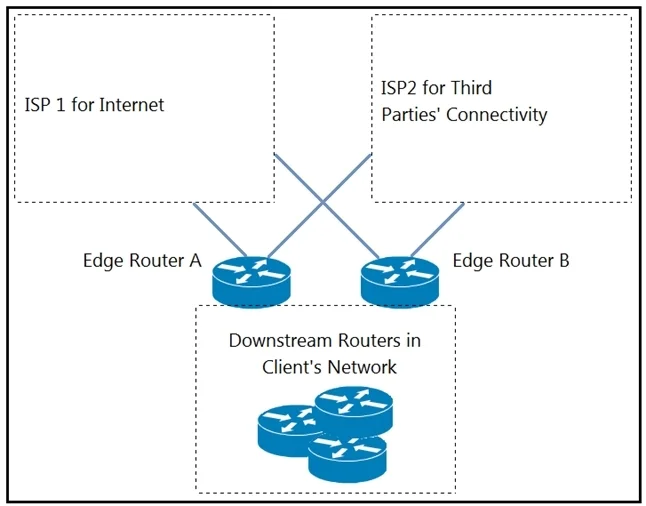
Refer to the exhibit. An engineer is designing a BGP solution for a client that peers with ISP1 for full Internet connectivity and with ISP2 for direct exchange of routes for several third parties…
The correct answer is B. Advertise a default route for downstream routers within the client network. To enable the client network to reach the Internet through ISP1, the edge routers must advertise a default route (0.0.0.0/0) to the internal downstream routers.
Question
Refer to the exhibit. An engineer is designing a BGP solution for a client that peers with ISP1 for full Internet connectivity and with ISP2 for direct exchange of routes for several third parties. Which action, when implemented on the edge routers, enables the client network to reach the Internet through ISP1?
Exhibit
Options
- ARun an eBGP session within different VRFs for each ISP.
- BAdvertise a default route for downstream routers within the client network.
- CApply the AS path prepend feature for ISP2.
- DApply route filtering such that the client advertises only routes originated from its own AS.
How the community answered
(27 responses)- A4% (1)
- B85% (23)
- C7% (2)
- D4% (1)
Why each option
To enable the client network to reach the Internet through ISP1, the edge routers must advertise a default route (0.0.0.0/0) to the internal downstream routers.
Running eBGP sessions within different VRFs would segment the routing tables, typically used for multi-tenancy or specific traffic isolation, but doesn't inherently solve the problem of client internal networks reaching the Internet.
Advertising a default route (0.0.0.0/0) from the edge router connected to ISP1 to the internal client network provides a path for all Internet-bound traffic. Without a default route, internal routers would not know how to reach destinations outside of the directly learned routes from ISP2 or internal BGP peers.
Applying AS path prepend for ISP2 would make the path through ISP2 less preferred for outbound traffic to its peers, but it does not enable the client network to reach the Internet via ISP1; it primarily influences how ISP2's peers would send traffic to the client.
Applying route filtering to advertise only routes originated from its own AS influences what the client advertises to ISPs, not how the client's internal network reaches the Internet.
Concept tested: BGP default route advertisement for internet access
Source: https://www.cisco.com/c/en/us/support/docs/ip/border-gateway-protocol-bgp/23758-bgpfaq04.html
Topics
Community Discussion
No community discussion yet for this question.