
300-420 · Question #396
Refer to the exhibit. A company architect proposed this network design as a part of the IPv6 migration strategy. What are two advantages of this design? (Choose two.)
The correct answer is A. It allows multiple independent networks to be built on top of a shared underlay. D. It enables the transport of protocols that are unsupported by the underlay. The design allows multiple independent IPv6 networks (overlays) to be established on a shared IPv4 underlay, supporting migration strategies without requiring immediate full-stack upgrades. It enables the transport of IPv6 traffic across an IPv4-only infrastructure, which is…
Question
Refer to the exhibit. A company architect proposed this network design as a part of the IPv6 migration strategy. What are two advantages of this design? (Choose two.)
Exhibit
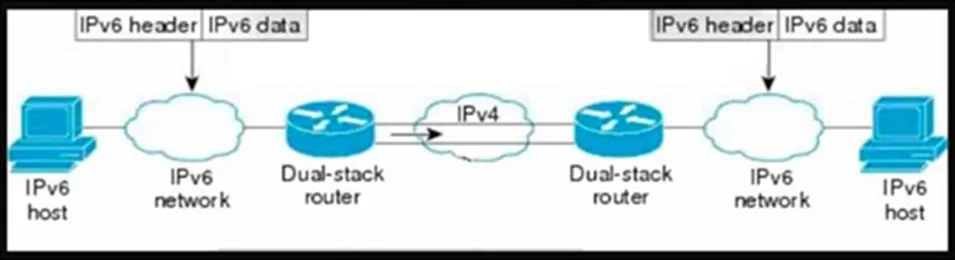
Options
- AIt allows multiple independent networks to be built on top of a shared underlay.
- BIt permits any number of devices to join the overlay network seamlessly.
- CIt provides increased scalability without increasing forwarding overhead.
- DIt enables the transport of protocols that are unsupported by the underlay.
- EIt establishes an independent network that does not share fate with the underlay.
How the community answered
(46 responses)- A78% (36)
- B13% (6)
- C2% (1)
- E7% (3)
Explanation
The design allows multiple independent IPv6 networks (overlays) to be established on a shared IPv4 underlay, supporting migration strategies without requiring immediate full-stack upgrades. It enables the transport of IPv6 traffic across an IPv4-only infrastructure, which is useful if the underlay does not natively support IPv6.
Topics
Community Discussion
No community discussion yet for this question.