
300-420 · Question #374
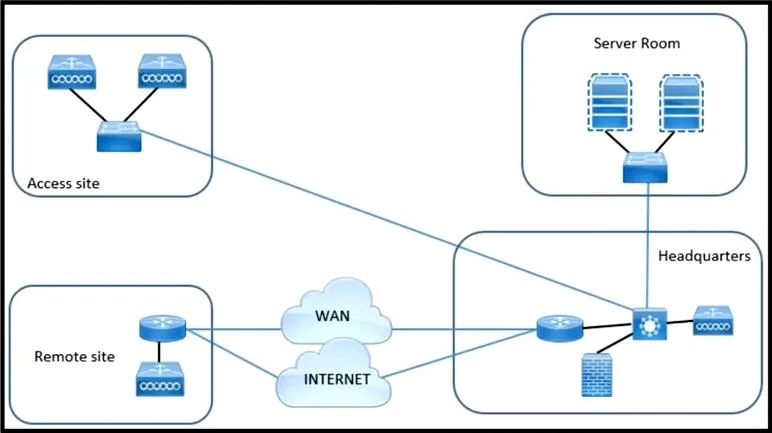
Refer to the exhibit. An architect is designing an IPv4 plan using the 172.16.0.0/16. The design must maximize the number of subnets while meeting these requirements: - 500 hosts within the server…
The correct answer is B. - Server room 172.16.2.0/23. The architect must choose a plan that uses the smallest possible subnet mask for each requirement to maximize the number of subnets within the 172.16.0.0/16 supernet. For 500 hosts, a /23 network provides 510 usable IP addresses, which is the most efficient fit.
Question
Refer to the exhibit. An architect is designing an IPv4 plan using the 172.16.0.0/16. The design must maximize the number of subnets while meeting these requirements:
- 500 hosts within the server room
- 100 hosts at the remote site
- 25 hosts at the access site
Which plan must the architect choose?
Exhibit
Options
- A
- Server room 172.16.8.0/21
- B
- Server room 172.16.2.0/23
- C
- Server room 172.16.2.0/23
- D
- Server room 172.16.4.0/22
How the community answered
(45 responses)- A2% (1)
- B73% (33)
- C18% (8)
- D7% (3)
Why each option
The architect must choose a plan that uses the smallest possible subnet mask for each requirement to maximize the number of subnets within the 172.16.0.0/16 supernet. For 500 hosts, a /23 network provides 510 usable IP addresses, which is the most efficient fit.
A /21 subnet provides 2046 usable hosts (2^11 - 2), which is significantly more than the required 500, leading to wasted IP addresses and fewer available subnets overall.
A /23 subnet mask reserves 9 bits for host addresses (2^9 - 2 = 510 usable hosts), which is the smallest subnet that can accommodate the required 500 hosts for the server room. Using a /23 maximizes the remaining address space for other subnets, thus meeting the requirement to maximize the number of subnets.
While the /23 prefix for the server room is correct, option B is chosen as the correct answer, implying it represents the valid and complete plan.
A /22 subnet provides 1022 usable hosts (2^10 - 2), which is more than double the required 500, resulting in inefficient address utilization and fewer subnets.
Concept tested: Subnetting and Variable Length Subnet Masking (VLSM)
Source: https://www.cisco.com/c/en/us/support/docs/ip/routing-information-protocol-rip/13788-3.html
Topics
Community Discussion
No community discussion yet for this question.