
300-420 · Question #162
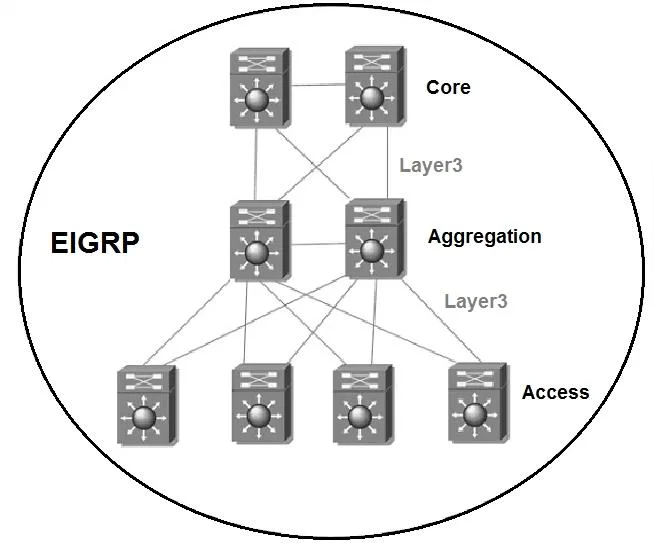
Refer to the exhibit. The full EIGRP routing table is advertised throughout the network. Currently, users experience data loss when any one link in the network fails. An architect optimizes the…
The correct answer is D. Summarize the access layer networks from the aggregation layer toward the core layer. Summarizing access layer networks from the aggregation layer toward the core layer is the optimal solution. When individual access-layer prefixes are advertised all the way to the core, a single link failure in the access layer triggers EIGRP Query propagation throughout the…
Question
Refer to the exhibit. The full EIGRP routing table is advertised throughout the network. Currently, users experience data loss when any one link in the network fails. An architect optimizes the network to reduce the impact when a link fails. Which solution should the architect include in the design?
Exhibit
Options
- AReduce the default EIGRP hello interval and hold time
- BRun BFD on the inter links between EIGRP neighbors.
- CSummarize the access layer networks from each access layer switch toward the aggregation layer
- DSummarize the access layer networks from the aggregation layer toward the core layer.
How the community answered
(44 responses)- A5% (2)
- B2% (1)
- C9% (4)
- D84% (37)
Explanation
Summarizing access layer networks from the aggregation layer toward the core layer is the optimal solution. When individual access-layer prefixes are advertised all the way to the core, a single link failure in the access layer triggers EIGRP Query propagation throughout the entire network (including the core), causing temporary routing instability and data loss during reconvergence. By summarizing at the aggregation layer, the core only sees summary routes. When an access link fails, the reconvergence is contained within the aggregation layer-the summary route remains valid at the core, so the core does not reconverge and no data loss occurs there. Option C (summarizing from access toward aggregation) helps but still exposes individual prefixes at the core. Options A and B (adjusting hello/hold timers or enabling BFD) speed up failure detection but do not reduce the scope of reconvergence or prevent data loss during the failure event itself.
Topics
Community Discussion
No community discussion yet for this question.