
300-415 · Question #168
Which vBond system configuration under VPN 0 allows for a routable public IP address even if the DNS name, hostname, or IP address of the vBond orchestrator are omitted?
The correct answer is B. local. The 'local' keyword in the vBond system configuration under VPN 0 allows the vBond orchestrator to use its interface's routable public IP address for connectivity without explicitly configuring its DNS name or IP for its global identity.
Question
Exhibit
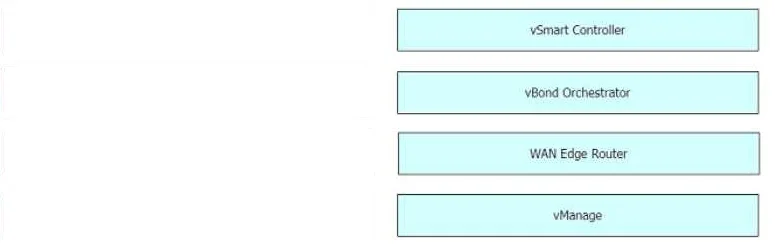
Options
- AWAN
- Blocal
- Cdns-name
- Dvbond-only
How the community answered
(44 responses)- A2% (1)
- B91% (40)
- C5% (2)
- D2% (1)
Why each option
The 'local' keyword in the vBond system configuration under VPN 0 allows the vBond orchestrator to use its interface's routable public IP address for connectivity without explicitly configuring its DNS name or IP for its global identity.
The 'WAN' keyword is not a standard configuration option for specifying a vBond's public reachability in this context; 'WAN' typically refers to the general wide area network.
The 'vbond <IP address> local' command under the vBond's system configuration in VPN 0 allows the vBond orchestrator to announce its locally configured interface IP address as its public-facing routable IP, enabling connectivity without relying on a separate DNS name or specific public IP configuration.
The 'dns-name' option is used to specify a DNS hostname for vBond, requiring DNS resolution, which contradicts the scenario where DNS name/hostname are omitted.
'vbond-only' is not a recognized keyword for specifying how vBond announces its public reachability.
Concept tested: vBond local configuration for public reachability
Source: https://www.cisco.com/c/en/us/td/docs/routers/sdwan/configuration/sdwan-xe-gs-book/sdwan-vbond-deploy.html
Topics
Community Discussion
No community discussion yet for this question.