
300-320 · Question #86
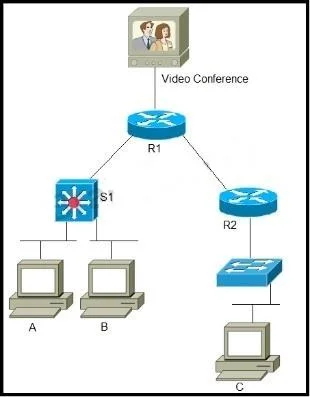
Refer to the exhibit. The network engineer wants to ensure that receiver A does not receive traffic from the video conference. For multicast traffic, where must the filtering be placed to fulfill…
The correct answer is D. S1. In multicast networks, filtering should be applied as close to the receiver as possible to avoid wasting bandwidth on links leading to that receiver. S1 is the switch directly connected to receiver A. By placing the filter on S1 (using IGMP snooping policies or port-level…
Question
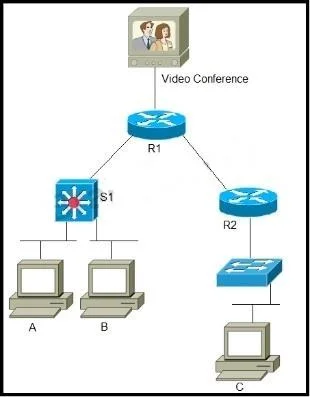
Refer to the exhibit. The network engineer wants to ensure that receiver A does not receive traffic from the video conference. For multicast traffic, where must the filtering be placed to fulfill that requirement?
Exhibits
Options
- AR1
- BVideo Conference
- CA
- DS1
- ER2
How the community answered
(23 responses)- A9% (2)
- C17% (4)
- D70% (16)
- E4% (1)
Explanation
In multicast networks, filtering should be applied as close to the receiver as possible to avoid wasting bandwidth on links leading to that receiver. S1 is the switch directly connected to receiver A. By placing the filter on S1 (using IGMP snooping policies or port-level access control), multicast traffic is blocked before it reaches receiver A's segment. Filtering at routers R1 or R2 would either be too far upstream or affect other receivers, and filtering at the video conference source or on the receiver itself is less efficient or less appropriate.
Topics
Community Discussion
No community discussion yet for this question.