
300-320 · Question #35
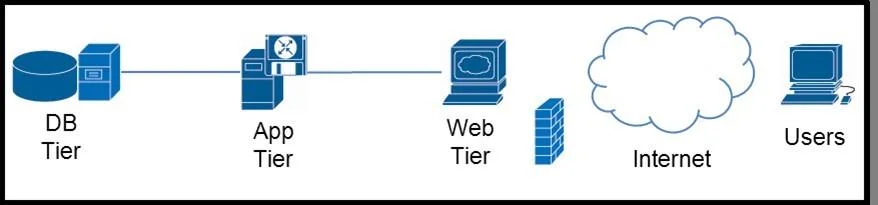
Refer to the exhibit. A customer requires a web application implementation, but the web server has communication only to the application server and users, and the database server has communication…
The correct answer is B. routed mode with three security zones. The scenario describes a three-tier application: users communicate with the web server, the web server communicates with the application server, and the application server communicates with the database server. Each tier must be isolated with controlled communication paths-this…
Question
Refer to the exhibit. A customer requires a web application implementation, but the web server has communication only to the application server and users, and the database server has communication only to the application server. What firewall design is the best fit for this scenario?
Exhibits
Options
- Atransparent mode with the servers on the same subnet
- Brouted mode with three security zones
- Ctransparent mode with three security zones
- Drouted mode with two security zones
How the community answered
(48 responses)- A8% (4)
- B48% (23)
- C27% (13)
- D17% (8)
Explanation
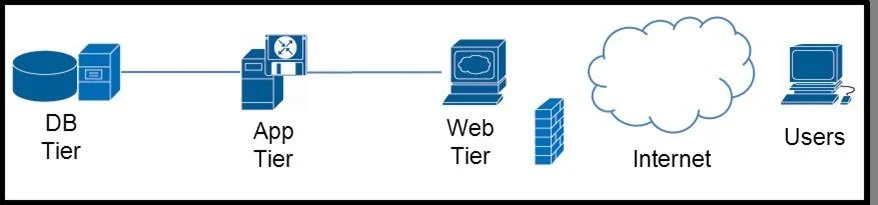
The scenario describes a three-tier application: users communicate with the web server, the web server communicates with the application server, and the application server communicates with the database server. Each tier must be isolated with controlled communication paths-this maps directly to three security zones (e.g., outside/user zone, DMZ/web zone, and inside/app-DB zone). Routed mode is required because the firewall must act as a Layer 3 gateway between zones, enforcing security policies and routing traffic between different subnets. Transparent mode (A, C) operates at Layer 2 and is unsuitable when distinct subnets are required per zone. Two security zones (D) would not provide sufficient segmentation for three tiers.
Topics
Community Discussion
No community discussion yet for this question.