
300-070 · Question #296
When configuring digit manipulation on a gateway which two do you use for prefixing digits on outgoing calls? (choose two)
The correct answer is C. * D. \. On Cisco IOS gateways, digit manipulation is performed using translation rules. In a translation rule replacement pattern, the backslash '\' (D) is used as an escape or back-reference character-for example, '\1' refers to the first captured group from the match pattern…
Question
When configuring digit manipulation on a gateway which two do you use for prefixing digits on outgoing calls? (choose two)
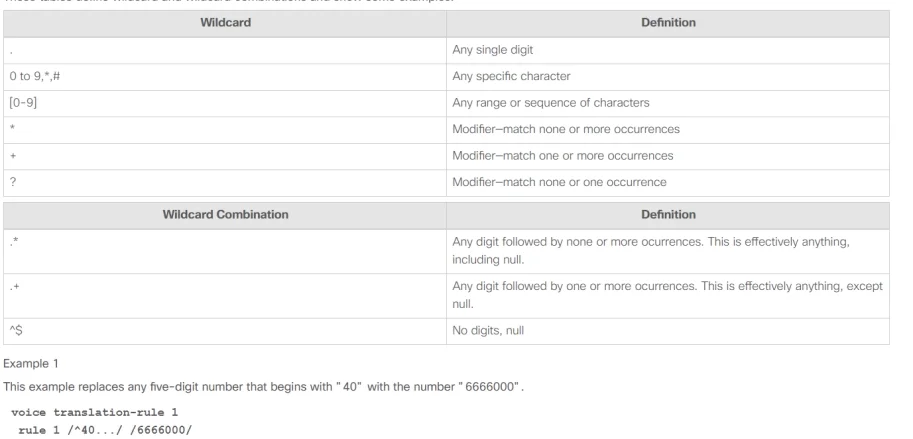
Exhibit
Options
- A=
- B!
- C
- D\
- E0-9
How the community answered
(51 responses)- A2% (1)
- B6% (3)
- C90% (46)
- E2% (1)
Explanation
On Cisco IOS gateways, digit manipulation is performed using translation rules. In a translation rule replacement pattern, the backslash '' (D) is used as an escape or back-reference character-for example, '\1' refers to the first captured group from the match pattern, allowing matched digits to be retained while new digits are prepended. The asterisk '*' (C) is used in some digit-manipulation contexts as a wildcard or prefix operator within the rule syntax. Together, these allow you to prepend digits to the called number on outgoing calls. The equals sign '=' (A) is used for DNIS substitution in some contexts but not for prefixing. The exclamation mark '!' (B) is a wildcard in dial-peer destination patterns, not a manipulation character. Digits 0-9 (E) are valid in replacement strings but by themselves are not special manipulation operators for prefixing.
Topics
Community Discussion
No community discussion yet for this question.