
300-070 · Question #252
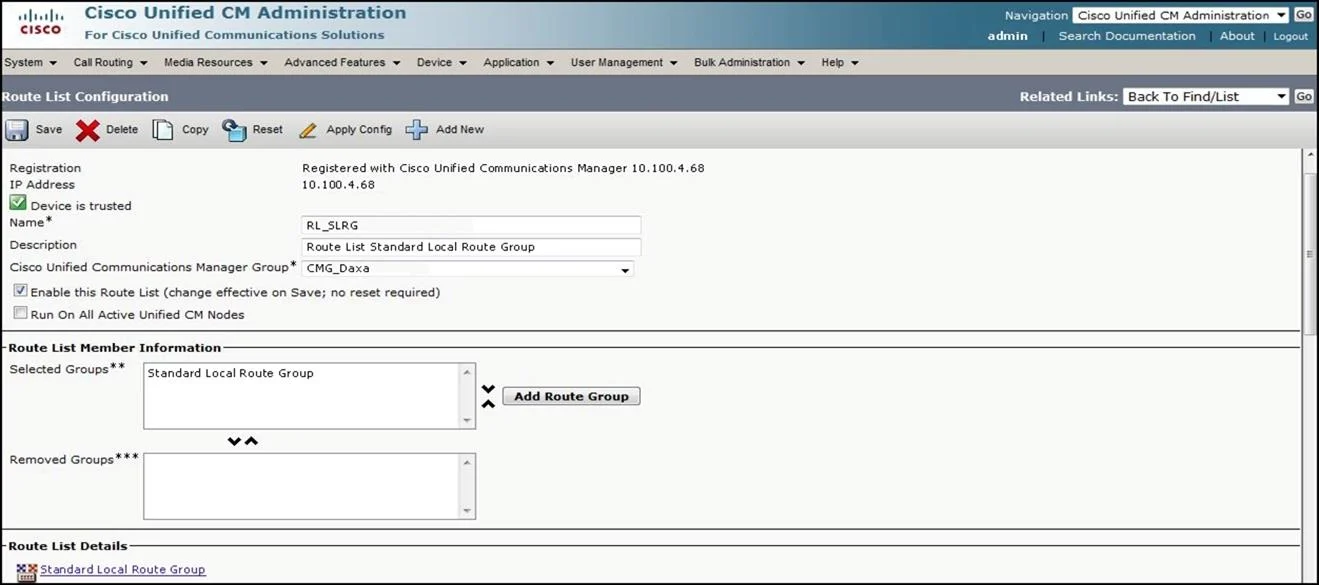
Refer to the exhibit. What is the benefit of using the standard Local Route Group?
The correct answer is B. You can have a simplified dialing plan, in which you use the same route patterns, calling search. The Standard Local Route Group (B) allows administrators to build a simplified, centralized dial plan where a single set of route patterns can serve all office locations. Each Device Pool maps the 'Local Route Group' token to a site-specific Route Group (containing that site's…
Question
Refer to the exhibit. What is the benefit of using the standard Local Route Group?
Exhibit
Options
- AThe Standard Local Route Group is used exclusively for local calls
- BYou can have a simplified dialing plan, in which you use the same route patterns, calling search
- CYou can have a noncentralized dialing plan for all company offices, to ensure reliability and
- DYou can make call routing decisions based on the closest gateway to the destination of the call
How the community answered
(37 responses)- A8% (3)
- B84% (31)
- C5% (2)
- D3% (1)
Explanation
The Standard Local Route Group (B) allows administrators to build a simplified, centralized dial plan where a single set of route patterns can serve all office locations. Each Device Pool maps the 'Local Route Group' token to a site-specific Route Group (containing that site's gateways). When a phone places a call, CUCM substitutes the actual Route Group based on the calling phone's Device Pool, automatically routing the call through the nearest gateway - without needing duplicate route patterns per site. Option A is incorrect because Local Route Group is not limited to local calls. Option C is incorrect; the design is actually centralized, not non-centralized. Option D is incorrect because routing is based on the calling device's location (closest gateway to the source), not the destination.
Topics
Community Discussion
No community discussion yet for this question.