
2V0-621D · Question #182
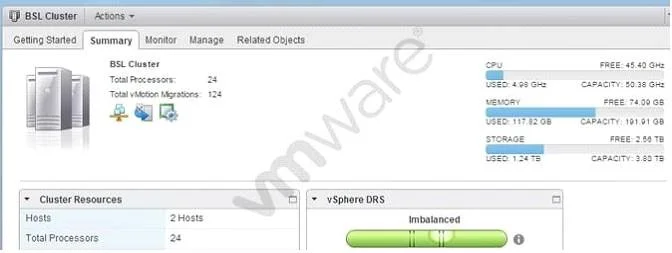
Refer to the Exhibit. An administrator is reviewing a vSphere Distributed Resource Scheduler (DRS) enabled Cluster and observes unexpected behavior as shown in the Exhibit. What are three potential…
The correct answer is A. A local device is mounted to one or more virtual machines. B. DRS rules prevent virtual machines from being moved. C. vMotion is not configured and enabled. Cluster imbalance is often caused by a local device mounted to one or more VMs and the DRS rules are preventing the VMs from being moved. Similarly, check vMotion to see if it is configured
Question
Refer to the Exhibit. An administrator is reviewing a vSphere Distributed Resource Scheduler (DRS) enabled Cluster and observes unexpected behavior as shown in the Exhibit. What are three potential causes of the cluster imbalance? (Choose three.)
Exhibit
Options
- AA local device is mounted to one or more virtual machines.
- BDRS rules prevent virtual machines from being moved.
- CvMotion is not configured and enabled.
- DThere are insufficient cluster resources to perform the migration.
- EDRS has been configured for a conservative migration threshold.
How the community answered
(30 responses)- A80% (24)
- D13% (4)
- E7% (2)
Explanation
Cluster imbalance is often caused by a local device mounted to one or more VMs and the DRS rules are preventing the VMs from being moved. Similarly, check vMotion to see if it is configured
Topics
Community Discussion
No community discussion yet for this question.