
201 · Question #241
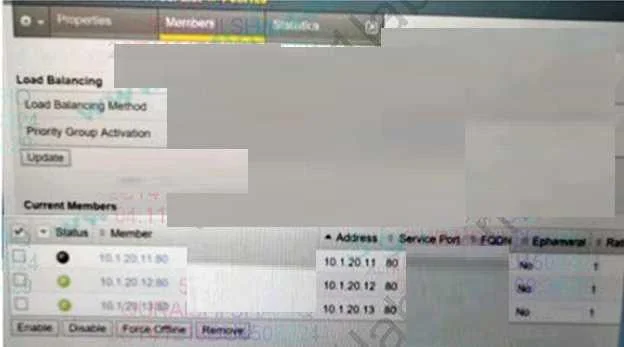
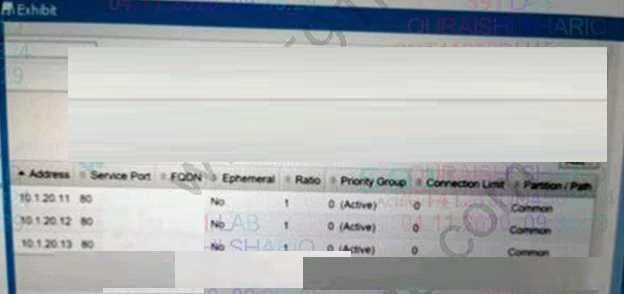
Refer to the exhibit. During maintenance, the BIG-IP Administrator manually disables a pool member as shown. What is the result?
The correct answer is A. All pool members continue to process persistent connections. When a pool member is manually disabled, it stops accepting new connections but continues to process any existing and persistent connections to maintain session integrity.
Question
Refer to the exhibit. During maintenance, the BIG-IP Administrator manually disables a pool member as shown. What is the result?
Exhibits
Options
- AAll pool members continue to process persistent connections
- BAll pool members stop accepting new connections.
- CThe disabled pool member stops processing persistent connections.
- DThe disabled pool member stops processing existing connections
How the community answered
(29 responses)- A90% (26)
- B3% (1)
- C7% (2)
Why each option
When a pool member is manually disabled, it stops accepting new connections but continues to process any existing and persistent connections to maintain session integrity.
Disabling a pool member in a BIG-IP system prevents it from accepting new connections but allows it to gracefully complete existing and persistent connections. This ensures that ongoing user sessions that have established persistence are not abruptly terminated.
This statement is incorrect because only the disabled pool member stops accepting new connections, not all pool members in the pool.
This statement is incorrect because a disabled pool member continues to process persistent connections until they naturally expire or are terminated by the client.
This statement is incorrect because a disabled pool member continues to process existing connections, allowing for a graceful shutdown without interrupting active sessions.
Concept tested: BIG-IP pool member disable state behavior
Source: https://techdocs.f5.com/en-us/bigip-15-0-0/big-ip-local-traffic-management-concepts/pool-members-nodes-and-pools.html
Topics
Community Discussion
No community discussion yet for this question.