
201 · Question #102
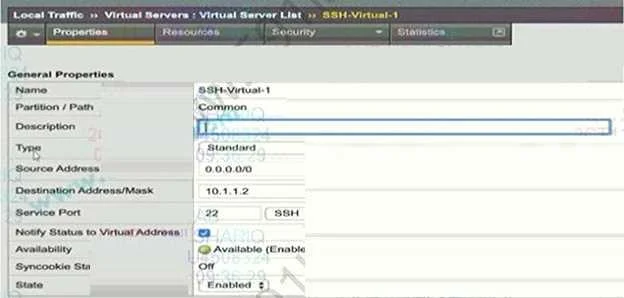
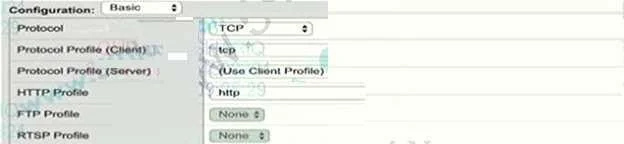
Refer to the exhibit. A BIG-IP Administrator creates a new Virtual Server to load balance SSH traffic. Users are unable to log on to the servers. What should the BIG-IP Administrator do to resolve…
The correct answer is B. Set HTTP Profile to None. When load balancing SSH traffic, an administrator should ensure no HTTP profile is applied to the virtual server to prevent interference with the SSH protocol.
Question
Refer to the exhibit. A BIG-IP Administrator creates a new Virtual Server to load balance SSH traffic. Users are unable to log on to the servers. What should the BIG-IP Administrator do to resolve the issue?
Exhibits
Options
- ASet Protocol to UDP
- BSet HTTP Profile to None
- CSet Source Address to 10.1.1.2
- DSet Destination Addresses/Mask to 0.0.0.0/0
How the community answered
(40 responses)- A3% (1)
- B78% (31)
- C13% (5)
- D8% (3)
Why each option
When load balancing SSH traffic, an administrator should ensure no HTTP profile is applied to the virtual server to prevent interference with the SSH protocol.
SSH operates over TCP, not UDP; setting the protocol to UDP would prevent all SSH connections from establishing correctly.
SSH is a TCP-based protocol, not HTTP. Applying an HTTP profile to an SSH virtual server causes the BIG-IP system to attempt HTTP processing and parsing, which interferes with the SSH handshake and prevents successful user logins, thus setting the HTTP profile to 'None' bypasses this Layer 7 processing.
Setting the source address to a specific IP would restrict access from only that IP and does not resolve issues related to protocol interference from an HTTP profile.
Setting the destination addresses/mask to 0.0.0.0/0 is a common wildcard configuration for a virtual server but does not address issues caused by an incorrect profile assignment for the traffic type.
Concept tested: BIG-IP virtual server profile configuration for non-HTTP traffic
Source: https://techdocs.f5.com/en-us/big-ip-system-and-module-reference/big-ip-profiles-reference/http-profile.html
Topics
Community Discussion
No community discussion yet for this question.